



We’re happy to announce that Circus has come 2nd place in a Google Partners competition for mobile performance.
Launched in April of this year, Ready to Rock 2015 is the latest competition from Google as part of their Partners program. The competition provided the latest product insights, along with an incentive to achieve outstanding performance – although we feel our clients are incentive enough!
As an accredited Google Partner, we were competing against other agencies across the UK and IE. We’re particularly happy to be performing well on mobile. 1 in 3 of all UK online sales are now made on a mobile or tablet, so it’s more important than ever that our clients are visible across all devices.
We’ve scored tickets to a concert of our choice, so we’ll be taking out the Circus team to celebrate.
A full list of winners can be found here: Drumroll please…
For more information on mobile visit our mobile services page.
BING PLAS COMING TO THE UK
We’ve heard from an inside source that Bing PLAs are coming to the UK in August of this year – hopefully!
PLAs work extremely well on Google in the UK and we can’t wait for these to become available for Bing too. Already live in the US, the latest from Bing HQ is that they’re doing well.
If you need a reminder, Product Listing Ads, or PLAs appear when someone searches for your products on Google or Google shopping. Google show the customer a picture of your item, its price and your shop name. Customers who click on your ad are directed to your website where they can buy your item. Further information on PLAs and the benefits can be found on our Shopping services page. 
It was March of 2014 when Bing announced that Product Ads would be available for all US Bing Ads advertisers. At the time they published this article with details and instructions from their engineering team. It gives us a good idea of what we can expect here also.
Instructions from the Bing Ads Engineering Team
Although the August date for the UK is still speculative, this announcement is good news. For our retail clients, Google PLAs work extremely well. About one third of sales come from Shopping, with 5% lower CPAs and higher ROAs/ROI.
Although Bing PLAs will be smaller in volume, it will expand the reach for our clients, increase sales and revenue, drive higher ROI and improve brand awareness and recognition. I think you can understand why we’re keen to get started!
GOOGLE’S ‘FINAL URLS’ ARE HERE
Google have finally decommissioned Destination URLs.
Since 1998, Destination URLs have been telling Google where to send the user once they click on an ad or in other words, it’s the web address to your landing page. In this upgrade, Google have now replaced the destination URL field with a final URL field.
In essence, they pretty much do the same job – a destination URL is where the user ends up, and the final URL is where the user ends up too. So what’s the difference and why do we care? Well, the issue is with tracking. The upgrade creates a new field for tracking management. The good news is if you don’t use tracking, you don’t need to change a thing.
If the domain of your final URL is the same as the display URL then no problem, simply stick the entire URL including any tracking parameters into the final URL as you did before. If you use a third party tracking solution then you need to use the separate tracking parameters field. Google doesn’t simply accept third party tracking URLs in the final URL as before. To do this, you need to speak to your supplier about the best way of setting this up.
We’ve found the transition an easy one. Google has auto upgraded any destination URLs that were on the same domain as the display URL. For any new ads, we simply use the final URL instead of the destination URL.
With third party tracking (such as Double Click or Atlas) our suppliers have integrated their URL parameters into the software for an easy transition.
Although this may be a big change within the industry, impact on our clients has been minimal and most importantly, there has been zero impact on their customers.
If you want to know more, support from Google can be found at the following links, or alternatively, get in touch with the team here at Circus.
NEW CLIENT: HIPPO
We’d like to introduce you to our new client, HIPPO, the company behind the innovative HIPPOBAG.
Available in three sizes, the HIPPOBAG is the perfect alternative to skip hire. You simply buy a bag from their site (which arrives flat packed in the post) fill it, then give HIPPO a call and they’ll come and collect it. At a whopping 4.5 cubic yards, the HIPPOSKIP is the largest, ideal for disposing your entire general garden, DIY or household waste. HIPPO are experts in waste clearance, with over 10 years experience helping tradesman, home owners and gardeners on a variety of projects.
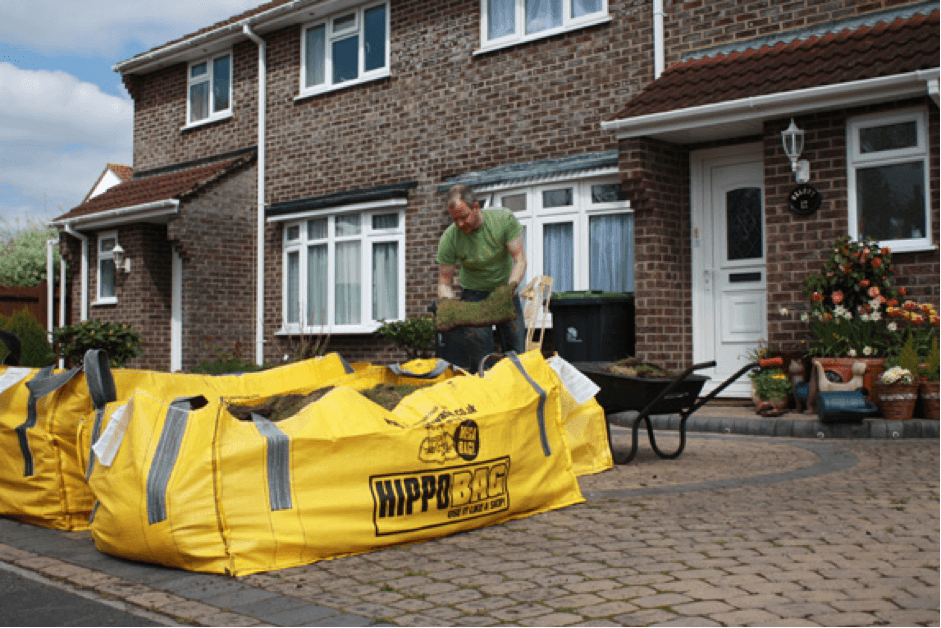
HIPPO’s previous PPC campaign was nearly all brand led traffic with very few non-brand sales. We are looking to address that.
We aim to reduce the cost per sale on branded searches to increase efficiency and building growth in non-brand sales into the account. The old account drove low volumes of non-brand sales with high costs; the new account will drive much higher non-brand sales with a MUCH reduced CPA.
The previous campaign was hyper-locally targeted (skips in Battersea, skip hire Salford etc.) which wasn’t performing well against local companies, so we’ve switched that to a national generic campaign (skip hire, skips etc.) which will actually reduce competition and increase sales volume.
We are already seeing much stronger results already with 15 times more sales and 80% lower CPA.
Hippo bag can also be found in B&Q, Wilkinsons and Homebase, and is currently featured on the Love Your Garden program. www.hippobag.co.uk
NEW CLIENT: HARRINGTON BROOKS
We’re excited to be working with one of the UK’s largest debt management companies, Harrington Brooks.

Over 65,000 clients trust them to handle their Individual Voluntary Arrangement (IVA) or financial management plans. Harrington Brooks specialise in debt help and advice, debt management and bankruptcy.
We will be working with their site www.debtfree.co.uk, which provides a safe place for people in debt to find counsel and practical support.
In working with our team at Circus, Harrington Brooks are building a campaign that will focus on debt help, debt management, debt consolidation and IVA keywords.
Our strategy revolves around high aggression campaigns that will put them into the number 1 position for all key terms.
In this incredibly volatile market where competitors come and go, we’ll be looking to hold and build on Harrington’s steady position and dominate the marketplace.
In our first months with the client we will undergo a full account clean up operation, first to remove waste, lower the CPA and then look to increase Lead volumes

In month 1 we expect to increase lead volume by 50% whilst reducing CPA by 30% driving profitability & cost savings.
For more information on Harrington Brooks, visit www.harringtonbrooks.co.uk/about
THE ABC OF ONLINE RETAIL
Every website requires continuous evolution and improvisation. To understand what needs attention it is important to dissect the flow and analyse the structure. This is a brief overview of the ABC model, a popular framework used to analyse performance across acquisition, behaviour and conversion.
Acquisition is also known as grabbing attention. It is usually the first point of interaction with the customer. Grabbing a prospect’s attention becomes even more important where competition is tough. If you don’t do something different to grab a customer’s attention, somebody else will. This stage is about, ‘what brings customers to your store’.
Different online marketing channels have different acquisition points. In paid search this refers to your ad copy as it is often what attracts a customer to click and interact with your website. The way customers react to ad copy can vary depending on where in the purchase funnel the customer is. Your marketing strategy establishes which area of purchase funnel you’re focusing on. However, irrespective of the funnel stage it is important to understand what interface drives better acquisition.
Online, the attention span is short, perhaps a second or even less. Considering the character limitation in AdWords and even organic results, it is almost impossible to include all the relevant detail required by the customer. Furthermore the customers are becoming smarter and when they see an ad that says up to 75% off they understand it does not mean all items are 75% off, but it does instil in their mind that the website has offers on. Therefore, ad copy does not lead to purchase and should not be deployed for this purpose. Rather it should be used to generate initial interest, leading customers to investigate further.

Once a curious customer has landed on your website it is important to see how the customer behaves on your site. This includes matrices such as time on site, pages per visit, viewed pages etc. Here, your website structure influences how a customer behaves. A poorly designed website with excellent ad copy is likely to get an amazing CTR and poor web stats. There are particular outcomes associated with specific matrices. These matrices indicate how engaged a visitor is.
Finally, conversion relates to the outcome of the customer’s visit. Did you capture customers’ details? Did you complete a sale? Did you find out why they left? Did you find out what they were after?
Conversion is usually the most difficult part to analyse. You don’t expect every user to buy something or everybody to tell you why they left. What you can do is flag post important corners and make sense of the pattern. Google categorises final outcomes (for example a sale) as macro conversions. Other actions suggesting a registered interest are marked micro conversions. These include actions such as downloading a catalogue, newsletter signups, leaving a comment / review / feedback etc.
This is a brief overview of the ABC model which can help you understand what needs to improve. Therefore, say your website has an acceptable conversion rate and behavioural matrices are also in place. Now if you want to grow sales you might be better off concentrating on acquisition. You might want to try new ad copies and explore / investigate new or existing channels of acquisition.
If your website conversion rate isn’t great then the first thing you should be focusing on is investigating behaviour by creating goals and analysing visitor funnels. Any investment in acquiring customers through AdWords or SEO is likely to result in wastage.
Rick Tobin | Managing Director | Circus PPC Agency
DO YOU UNDERSTAND THE RETAIL CONVERSION FUNNEL?
To get the most out of online advertising spend it’s important that you understand what your potential customers expect and ensure that your delivery matches their expectations. A significant gap between expectations and delivery can result in increased bounce rates, reduced engagement and wasted traffic/spend.

Google Industry reporting uses an index of thousands of AdWords and Analytics accounts to provide useful insights into customers’ behaviours and patterns. Below is an image showing the role of various channels in online marketing.
Paid search campaigns are very influential in driving sales. When people search for a product they have good idea of what they want to buy. One example would be a consumer looking for t-shirts or cereals but who haven’t yet finalised the brand or the specific product.
What this means to businesses is that their paid search campaigns should contain highly targeted keywords, ad copy and landing pages. These should be customised to provide a smooth shopping experience for customers. Ad copy should include offers, a clear call to action and keywords that target action words.
This approach does have some limitations however. For instance the entire purchase funnel cannot be ignored. It cannot be assumed that most customers start their online journey at the point of decision making. For a customer to purchase, it is important for them to become aware of your brand/product, and develop trust and consideration before buying. If your website’s engagement matrices are in place but they aren’t leading to an acceptable conversion rate then further research is required. It may be you need to invest in building awareness and trust before running your campaign to drive conversions.
To get the most out of your paid search campaign for ecommerce/retail business, your keywords, ad copy and landing pages should be targeted to drive action, rather than build opinion or awareness.
Rick Tobin | Managing Director | Circus PPC Agency
THE PPC PURCHASE FUNNEL IN THE FINANCIAL SECTOR
The purchase funnel in the financial sector has its own unique traits. Understanding these traits helps us improve our campaign strategy by letting appropriate channels do the job they are best at.

The image below summarises the role of various online channels in driving a customer to checkout.
The report signifies heavy reliance on Display/Click Network in generating awareness.
Most people use search when they have already made a decision to buy and have shortlisted a few companies to go with.
Companies can use display network to build awareness about their product or brand.
Online advertising works best to build awareness and drive sales, whereas other sources can help influence customers at the consideration stage.
It should be understood that the above report is an aggregation of industry trends. It’s very possible your customers may follow a different purchase funnel. Comparing your purchase funnel with the one above can give insight into how your business is performing, compared to the business sector overall.
Note: The above report is based on Google Industry insights.
The graph below summarises the role of channels in driving sales/leads.
The number of interactions or steps does not bear any significant impact on the average order value.
Rick Tobin | Managing Director | Circus PPC Agency


WHY YOUR PPC STRATEGY MAY NOT BE WORKING
Every year thousands of businesses feel that paid search is not for them. They have spent hundreds or thousands of pounds trying to get their PPC strategy to work with little success.
Paid search failures are mostly attributed to high CPA, less accurate targeting, account and campaign structure, or poor bidding. However, in this article I’m not going to talk about any of these. Instead I’m going to address some of the bigger reasons why your paid search strategy may not be working.
- Landing Page
If your paid search is doing its job then your users are landing on the most accurate page. That shouldn’t be a problem. Instead, I am more concerned about the content of your landing page and the website in general.
Put it simply. Assuming minimal difference in traffic quality between organic and paid your paid search and organic traffic is expected to behave similar. Before you start accusing your paid search strategy to have failed you need to ensure that your website is doing its job.
Go into Analytics and look at the data for organic search and paid search. If the bounce rate and conversion rate for your organic traffic is 80% and 0.05% respectively then you really can’t blame paid search for the same results.
Review and compare the search term report for both organic and paid search. Like any qualitative analysis, it takes time and effort but is well worth it. See if there is any significant difference between the two traffic sources and their behaviour which is causing a dip or improvement in performance. This segmentation and analysis will help you understand your traffic better and identify real problems to work on.
- Campaign Objective
Generally speaking there are five types of website objectives:
- E-commerce
- Lead Generation
- Content Publishers
- Information or support sites
- Branding
Now imagine you run a content publishing website and are looking for ways to build traffic. Before you dive into paid search it is important for you to understand that driving traffic is not a business objective. It is only a measure of how your business objectives are being met. Unless you know what that traffic is doing for your business goals, getting traffic onto your website is meaningless. Furthermore irrelevant traffic can harm your website by increasing bounce rate and decreasing time on site thus affecting your website performance.
Let’s say you run a paid search campaign to build traffic on your website. Now while it may boost your traffic momentarily it is unlikely to have long lasting impact. Similarly, if you are a car manufacturer and want to use the internet to educate your customers about your new product, paid search is unlikely to work people are unlikely to search for something they don’t yet know about.
Paid search can be used for the above purposes, but using paid search blindly is unlikely to churn any substantial results. We need to understand that paid search doesn’t work on its own. It needs to be part of an integrated strategy in order to maximise its ROI. For example, if you are using paid search to build traffic to a site that deals with content, then you should have a way to capture a user’s details in place.
You also need to align your business goals with the campaign. For example, image display advertising is likely to generate better results for a new product launch campaign as compared to paid search.
To summarise:
- Paid search needs to be understood in the context of your website’s business objectives
- Paid search cannot be entirely blamed for failure
- Your landing page, website goals, web tracking etc. need to be in place to get the best out of paid search.
- Segmenting and comparing your organic traffic with paid traffic can uncover great insights about your users and website.
Rick Tobin | Managing Director | Circus PPC Agency
Circus PPC Lands SOAS University of London PPC Contract
SOAS University Of London have selected Circus PPC Agency to manage their online PPC advertising campaigns
 SOAS, University of London is the only Higher Education institution in Europe specialising in the study of Asia, Africa and the Near and Middle East. SOAS combines language scholarship, disciplinary expertise and regional focus, it has the largest concentration in Europe of academic staff concerned with Africa, Asia and the Middle East and is synonymous with intellectual enquiry and achievement. It is a global academic base and a crucial resource for London.
Circus PPC have been engaged to help grow the awareness and uptake of their undergraduate courses. We will be working closely with SOAS to ensure high quality traffic is driven to their site improving both traffic and conversion rates, growing student interest and course bookings.