


Looking for the tips, tricks and stories around how to run the BEST PPC agency? Look no further.
If you’re behind on the series, see here for the 1st, 2nd, and 3rd instalment.
Welcome back to the 4th and final instalment of our ‘How To Run An Agency’ series, where Circus’s Founder and Managing Director, Rick Tobin, takes us behind-the-scenes in the life of an agency leader, and explains what he’s learnt from running an agency for almost 14 years.
This week, Rick rounds of the series by talking about the success of the agency so far, and what makes Circus unique.
“The biggest USP that our agency offers is that we are specialists – we are good at what we do, and we don’t try to be anything we’re not. As I’ve mentioned previously, Circus was born out of a love for PPC and to share that with others, so it only makes sense to continue doing what we love and are great at – rather than doing multiple things that we don’t love as much, and we aren’t as good at.”
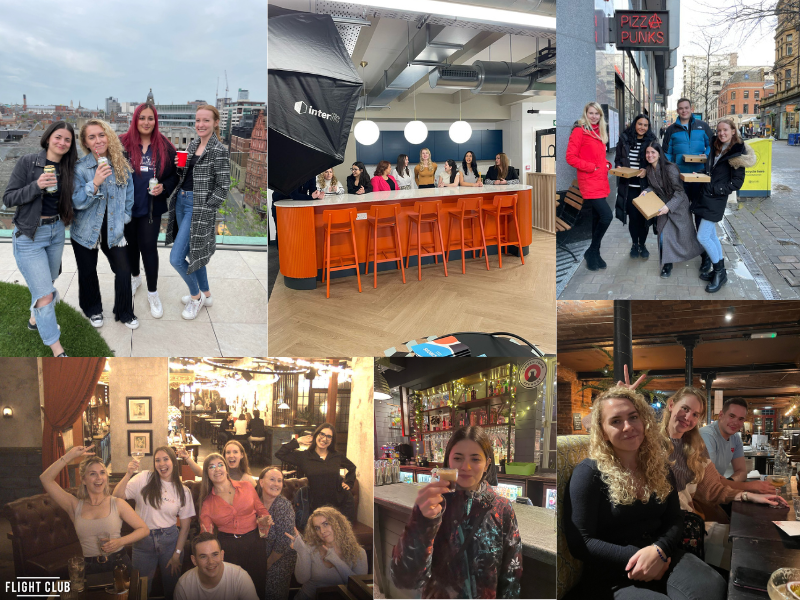
“Acceptance has been a difficult but necessary lesson to learn. We’re a small agency, which we means when we see losses we do notice it, but with every loss comes a gain. Change is inevitable, and more often than not – and it’s a cliché for a reason – when one door closes, another one opens. We’re confident that overall, these changes will help us to grow and continue to work towards being the best PPC agency out there.”
Whilst there may be losses, gains, and changes in an agency, Rick also spoke about the one thing that has never changed since the agency first came to be: the growth mindset.
“Something else that makes us (we may be biased) the best PPC agency is our growth mindset, which we apply to both ourselves and to clients – even when times are tough. The current economic downturn means that unfortunately, businesses are tightening their belts and in some cases, we’re seeing lower spends, less willingness to use budget for testing, and even stopping PPC spend altogether. However, we work closely with clients to drive growth and budget efficiency where required, and constantly explore new ways of working to do so.”

Perhaps the most important factor that Rick puts the success of the agency down to is the company culture that he’s cultivated as the agency has expanded and developed, stating that whilst growth and the work the agency does is extremely important – the team is more important.
“We spend the majority of our waking hours at work, so why shouldn’t we enjoy it? I try to make sure that even when the business is super busy, we don’t sacrifice time spent together as a team winding down and having fun. We look after our team, and do so to ensure not only that they are happy in the workplace, but also hopefully happy in every other aspect of their lives. Whilst this isn’t something we can control, it’s something we can assist with by making sure that we provide the resources and culture required for them to reduce workplace stress as much as possible.”
So, there it is – over the past few weeks, Rick has discussed the secrets and the stories, the highs and the lows, and the tips and tricks he’s learnt from having led an agency to success over the past 14 years.
For other agency leaders, what are your non-negotiables when it comes to your business?
How To Run An Agency: Part 3
Welcome back to part 3 of our ‘How To Run An Agency’ series, where Circus’s Managing Director, Rick Tobin, talks about the highs, lows, successes, failures, and challenges that come with running an agency.
If you need to catch up on the previous instalments, here’s part 1 and part 2.
Now, we’ve touched upon the history of the agency, along with the lessons and the challenges… but what about the endless positive, rewarding aspects of running an agency? Rick spoke more about what he loves about agency life, how to run an agency effectively, and how the whole team contribute to the the agency’s culture…
“I started the agency as a result of wanting to share my love of PPC with others that are passionate, determined, and motivated to deliver great results through the thing that we KNOW we’re good at. It’s one thing enjoying what you do, but it’s another thing being surrounded by a team that are so good at it.”

One of the biggest priorities that Rick has instilled within the agency’s culture is enjoying what you do, regardless of hard times, and remembering that sometimes, survival mode is a great leveller.
“Everybody wants to grow and push, but sometimes, just surviving as a business is okay! Despite experiencing hard times, like most businesses do, we’ve developed a culture that allows us to have fun along the way – and there’s something to be said about approaching every challenge with a positive mindset. We love what we do, which makes all of the fantastic results we see from doing a good job even more rewarding.”
Whilst results are important to the agency, Rick reiterated that it’s not what keeps the agency alive, nor is it how the agency measure success.
“The majority of business’s measure their success by numbers, however, culture is our biggest asset – not numbers.”

Rick spoke previously about how from the very beginning, he set up the agency to share his love of PPC with others experts who are equally as dedicated to driving great results for clients, but also highlighted how it takes work to find what works for the whole team.
“At the end of the day, it’s all trial and error – we’ve figured out what doesn’t work, and got rid of it, as well as finding out what does work… and doing more of it!”
Keep your eyes peeled for the final instalment of the series as Rick continues to talk about the highs and lows of running an agency!
How To Run An Agency: Part 2
Welcome back to our ‘How To Run An Agency’ series, where Circus’s Managing Director, Rick Tobin, talks about the highs, lows, successes, failures, and challenges that come with running an agency.
If you haven’t yet read part 1 of the series, you can check it out here!
As the famous saying goes, ‘you learn something new every day,’ and there’s nobody who knows this better than the leaders that are building and growing their businesses from the ground up, learning many lessons as they go. Rick spoke about the biggest lessons he has learnt as an agency leader, and how they’ve contributed to the success of the agency.
“By far the most important lesson I’ve learnt from running an agency is to always look after your people, your team. Numbers are important, but people are more important. I’ve also learnt not to compare ourselves to other agencies. Everyone works in their own way, and what might be successful for one person, could fail for another.”

Addressing the COVID-19 pandemic, Rick also spoke about how prioritising the team became even more important to prevent individual worries about the potential of redundancies – which unfortunately has affected many businesses over the past few years.
“The COVID-19 pandemic was an incredibly worrying time for a lot of people, and it’s important to remember that those you work with could be vulnerable to economic issues. I feel fortunate to be able to say that I’ve never had to let anybody go due to financial reasons, and to us, it’s something that always has and always will be the final resort.”
“Luckily, the retail boom during the pandemic meant that our industry wasn’t as negatively affected – from what we experienced – but that doesn’t mean that we live in a state of constant success, which was another lesson I’ve learnt over the years.”
Despite the continued success the agency saw during the pandemic, Rick highlighted another lesson – that growth might not ALWAYS be the top priority, and sometimes, just surviving is a win.
“Sometimes, running an agency is purely about survival, and making sure that we get through hard times in one piece, with our spirits still high. We don’t win every single day, month, or even year. But what remains is consistency, and believing that when one door closes, another one opens… and vice versa!”

Fortunately for the agency, over the past three years, Circus has gone from strength to strength, hitting their first ever £10m year, and growing their biggest team of experts to date – with plans to hire further before the end of the year.
“Ultimately, going back to my original point, prioritising your people will also help you to succeed. Funnily enough, if you treat people well, it makes them want to work harder towards the common goals that lead to success.”
Join us next time as Rick talks about some of the biggest challenges he’s faced as a leader since starting the agency back in 2009.
How To Run An Agency: Part 1
After operating as a one-man consultancy for a couple of years, Rick Tobin – Founder and Managing Director at Circus PPC Agency – set his mind on sharing his success with others, leading him to build an award-winning business still going strong 14 years later.
Rick reached out to former colleagues, Ahmed Chopdat and William Cheng, to join him and build an agency that brought together their shared passion for PPC, and their desire to achieve it together.
“The initial reason someone might think to transition from being a consultant, to starting an agency, as I did, is to make more money. However, being honest, I’ve probably made less money than I would have being a consultant. There’s much more equity, and it’s a lot more rewarding, which to me, is more important than the financial gain.
I was successful as a consultant, but it was becoming boring doing it alone. So, one of the biggest reasons I looked towards starting an agency was the social factor.”

The agency has continued to grow and achieve milestones at a rate that Rick couldn’t have imagined back in 2009, and he credits his desire to provide others with similar opportunities to thrive and succeed.
“There’s a lot of pride in building a team that delivers fantastic work, and to be able to provide team members with the opportunities to develop their own knowledge, career, and skills whilst surrounded by fellow experts.”
One of the biggest misconceptions Rick addressed was that running an agency is more work, or harder work, than working alone as a consultant.
“At the end of the day, everything is work. Running an agency is different work, as I’m working at more of a topline level, looking after the team, and adopting more of a strategy-led role for the agency. In fact, in the long run, it should be less work, as we would’ve managed to cultivate the agency we want to be, with everyone working harmoniously and in a way that suits us to deliver great results.”

Rick also spoke about the importance of enjoying what you do, and always prioritising having fun, even when times are hard.
“I love PPC – it’s why I became a consultant, and even more so why I built Circus, to share my love for PPC with others. If you’re not enjoying what you’re doing and if you’re not having fun… what’s the point? Yes, there’s times when we all have to work hard, disappointing things happen, and we need to up the ante to achieve what we want to achieve – but we always have an awful lot of fun doing it!”
Next week, Rick talks about the lessons he’s learnt, and how they’ve helped him to continuously improve the Circus PPC Agency culture.
Meet The Team – Rick
Ever wondered what an agency leader’s favourite food is? Wonder no more! Meet Rick, Founder and Managing Director of Circus – which he started as a one-man consultancy all the way back in 2009!
Get to know Rick here…

Name: Rick Tobin
Date Started at Circus: October 2009
What first made you want to pursue a career in PPC?
I love technology, the internet and marketing, and as a self-confessed geek PPC seemed like the perfect match for me!
What’s your favourite thing about working at Circus?
I love the variety in my role. One day I’m working on spreadsheets, the next with clients, the next with the team. I like meeting new people, networking, sales & spreading the great word of Circus and its amazing team. Great people, great clients and lots of opportunity to develop myself and the agency.
Who is your dream client?
Clients with big ambitions and a sense of purpose, ones that have the data and are willing to test, develop and grow.
If you could solve one PPC issue forever, what would it be?
Offline conversions. The tech and procedures are there but many clients find it clunky and just don’t use it.
What’s your dream holiday destination?
Like most people I love a good chill combined with a touch of culture, so somewhere that offers both like Italy, Greece, or South America.
What would your desert island meal be?
I love to eat fine food, go to the most celebrated of restaurants – quality over quantity, that’s me! So, I would have to say… Greggs sausage rolls – they are my kryptonite!
Tell us something about you that might surprise people.
My life is pretty much an open book and I doubt anything would surprise the people that know me. Maybe that I appeared on the inside of a CD cover (remember those?) dancing at the love parade in Leeds, dressed as an alien with a shaved green head… nope – probably wouldn’t surprise anyone!
If you could guest star on a TV show, which one would it be and why?
I would love to be an extra on Game of Thrones or Rings of Power (or something similar), as a random fighter in a HUGE battle getting my head, leg, or arm chopped off. I would maximise the life out of that role… nobody would die bigger, louder, or more dramatically than me!
Home or Office?
I can’t choose, I like both!
Morning or Evening?
Morning – no afternoon meetings for me.
Dog or Cat?
Dog – Teddy would kill me if I said anything else.
Countryside or City?
Countryside – cow pats over city rats!
Spender or Saver?
Ah crap, yeah, spender for sure.
Coffee or Tea?
Coffee – wake up juice!
Summer or Winter?
Summer – not a fan of the cold.
Circus PPC Opens New London Office
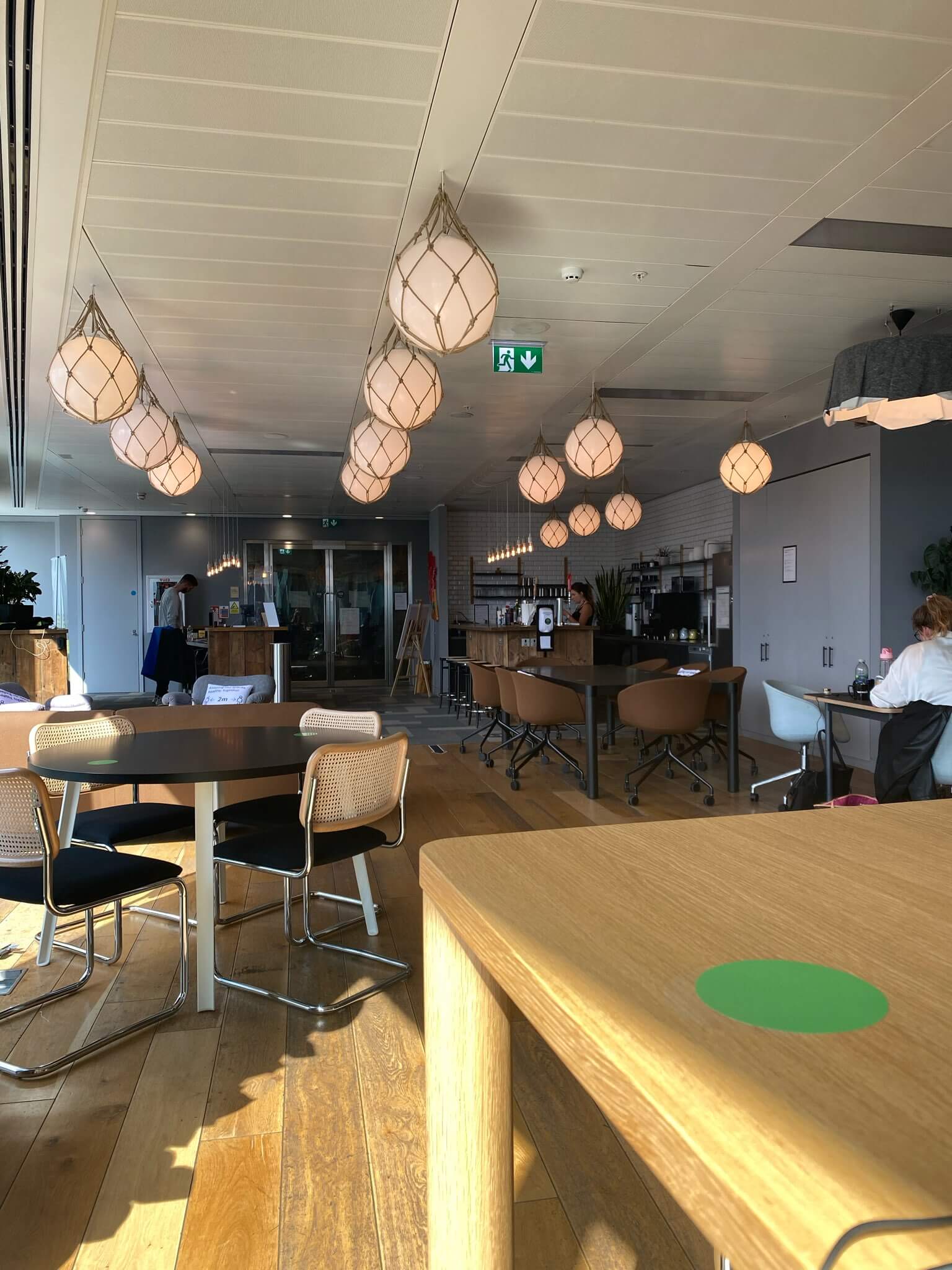
 Circus PPC have opened their new London office. Circus PPC who work with the likes of Miele and Lavazza Professional have opened up their new office in London.
The new office is in WeWork, New Kings Beam House, London.
Now a very established agency about to hit the 12 years mark, Circus PPC is a well-recognised agency who work with some fantastic clients.
“We are all excited about our expansion into London, providing circus with a base of operations in the capital. The move represents the next chapter for circus, our confidence in the agency, the team and the industry as well. We can provide local clients with an enhanced service, speed of delivery and helps develop long lasting relationships. This is only the start of the expansion with more exciting news to follow later this year” Rick Tobin, MD
Some photos of the office:


Shoptimised – Feed Management Software Top Tips
Have you had the struggles of having to update the feed manually? Or making constant requests to developers to update the feed? Or to even create a feed?
There is a good chance by now you have found a solution for this. Our preferred solution we found a few years ago was Shoptimised. Whilst many similar tools exist, we found Shoptimised to meet all our needs and a perfect partner to Circus PPC.
This was just before the CSS partners were given the 20% discount by Google which the platform supported for us to make our lives easier.
Why is optimising your feed important?
The percentage of product titles which are duplicates in Google shopping are 46.69%. By simply taking the suppliers feed and using that you will only be one of the many who have the exact same product titles and descriptions as your competitors.
The percentage of times the search query is matched through your product title currently stands at 80%. This means if you are not updating your product titles (where and when appropriate) you will not be matching to potentially relevant search queries.
On top of this many feeds have a high percentage of products which are disapproved by Google for having incorrect data or the data is not in a compatible format for the Google merchant centre. If these issues are ongoing or for what Google may deem as serious your account can get suspended.
Some of the common issues we find with feeds.
- Missing attributes: The most common ones usually are: GTIN and Price
- Price does not include VAT in the feed: This is common for many B2B websites however Google requires the feed price to be with VAT: This is easily solvable in a tool like Shoptimised.
- Shipping information is missing: Again, this is easily solvable in a tool like Shoptimised.
- Google product Category has not been identified: A quite common occurrence to see in many custom coded websites which do not tend to use any eCommerce platforms.
One reason we have seen for multiple issues to occur on a feed was, the feed was an afterthought after the website was built hence butchered together so multiple fields were missing, and many other issues existed with the feed.

So, you have created your feed, you have fixed all the issues and now you want to improve your feed to make it work even better. Below are 10 tips to help improve your feed and make your shopping campaigns perform even better. Many of these tips are specific to Shoptimised however other platforms may have similar tools as well.
- Use as many of the 150 characters as possible from the product title: Include all relevant attributes: colour, size, brand, material, etc. More weight is given to the start of the title however so frontload the important information to the beginning.
- 15% of all searches are matched to keywords or phrases in your descriptions so it is important this is perfect. We would recommend 500 – 1500 characters in your feed descriptions. Avoid any promotional text or delivery descriptions. Remove any merchandising text such as “For a more casual look, try pairing with distressed denim jeans and crisp white trainers” as this will only confuses things and you will match for less relevant search queries.
- Google recommend using a minimum depth of 3 product types however we have found using a depth of 5 actually yields more relevant results.
- Rather than manually auditing feeds, the Shoptimised feed auditing tool is great, especially for new feeds.
- The converting terms report on Shoptimised shows the search terms which have been converting and a useful report to look at when updating your product titles.
- You can bulk title edit in Shoptimised. You can create rules for this as opposed to having to update them all the time.
- Create product clones. Whilst this is not recommended by Google, we have seen strong results yielding from testing this. It is also a good way to run split tests when it comes to shopping
- Create performance rules. Use Performance Rules to automatically highlight the best performing products in your account. You can then create a performance-based campaign in Google Ads.
- List Data Edits. This is especially useful if you are wanting to make edits to a large number of products.
- Make sure to use the team at Shoptimised who understand feeds more than many and have even helped us create custom solutions for our clients sometimes.
For more details on any of the above or if you feel like you want to get more out of your shopping campaigns, do get in touch.
Smart Shopping
Intro
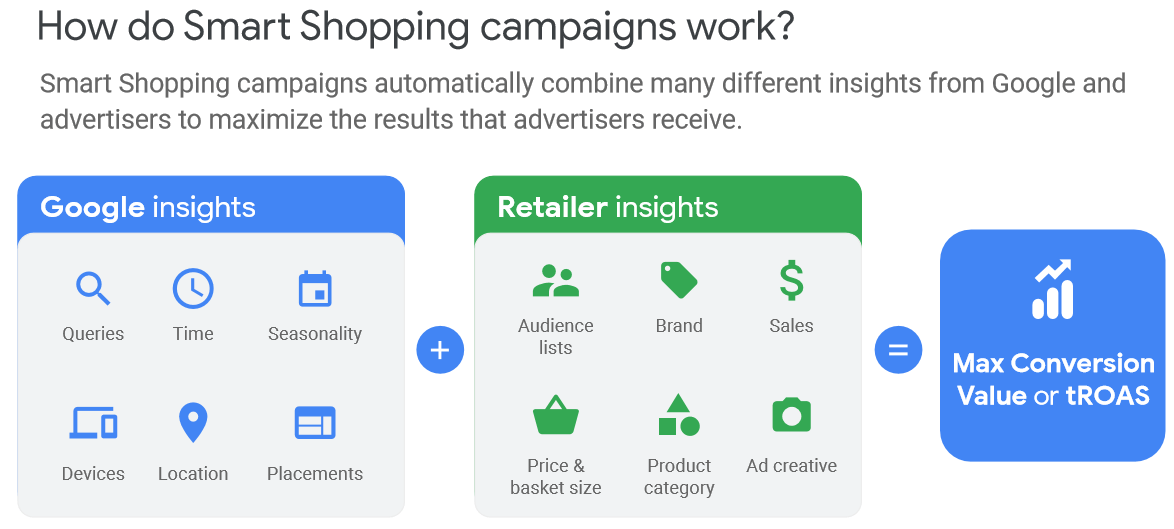
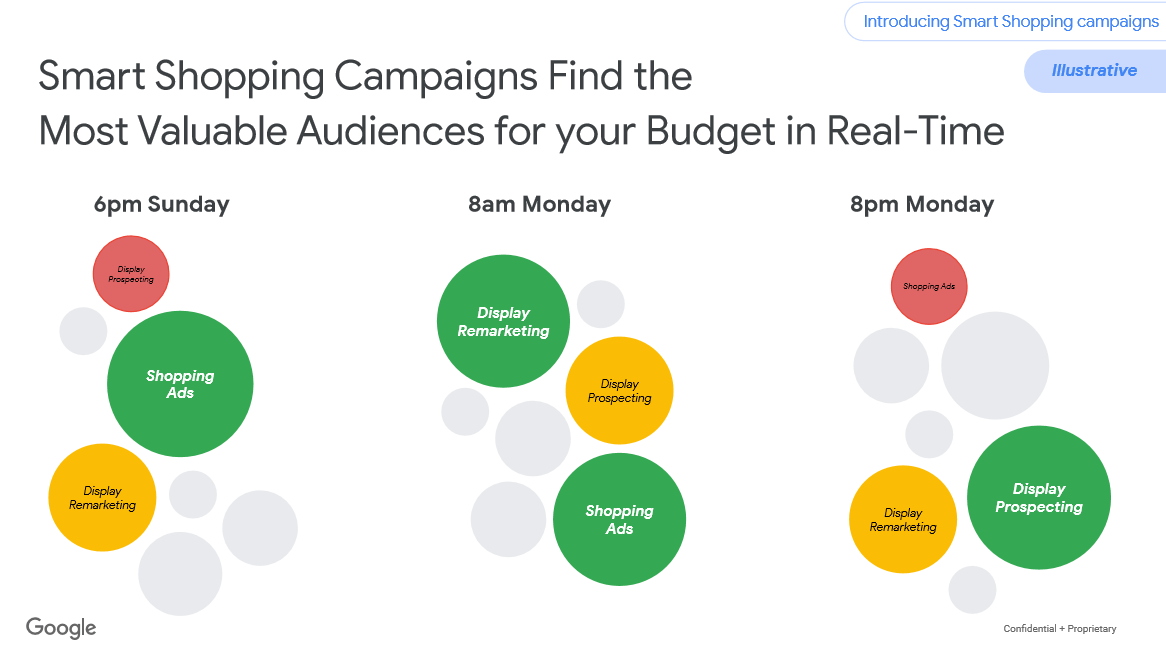
Smart Shopping is Google’s version of automated shopping which uses algorithms in order to maximise your return from shopping. One of the benefits with Smart Shopping is that it is able to look at many more signals in order to find the most valuable audiences on the Google network for your budget in real time. This means that Google can show your products to a relevant customer at the right time and through the right channel in order to maximise the chance of conversion.
Rather than just utilizing the Shopping network, Smart Shopping can use the display network, Gmail and Youtube as platforms to dynamically remarket products to customers which is another reason why advertisers adopting Smart Shopping see a 30% increase in conversion value when using Smart Shopping.
Set Up
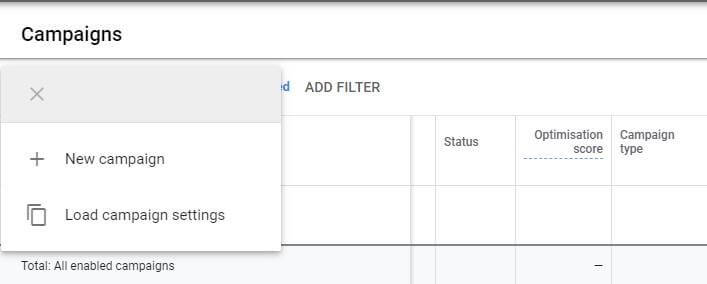
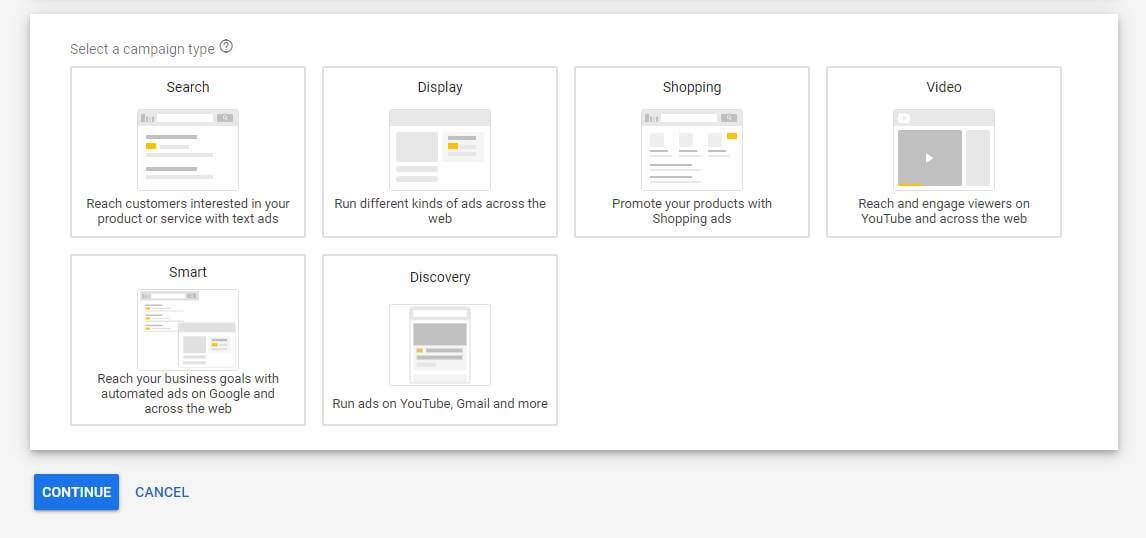
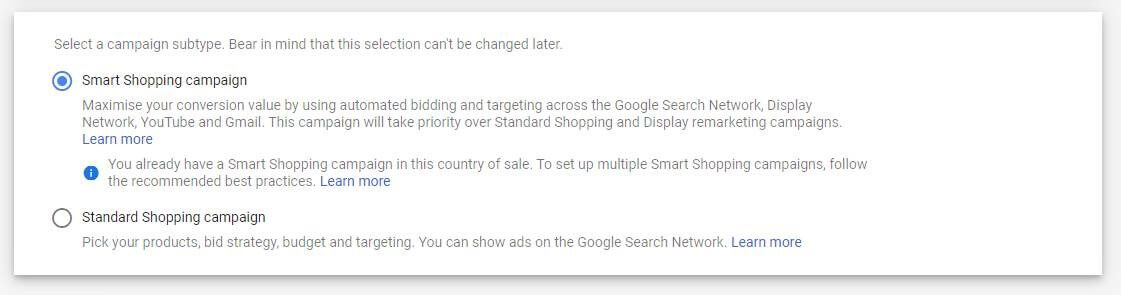
The set-up of a Smart Shopping campaign is very similar to setting up a normal shopping campaign in the Google Ads interface and can be done in 4 simple steps.
- Click New Campaign
- Click Shopping
3. Select Smart Shopping Campaign
4. Set Budgets and ROAS Targets
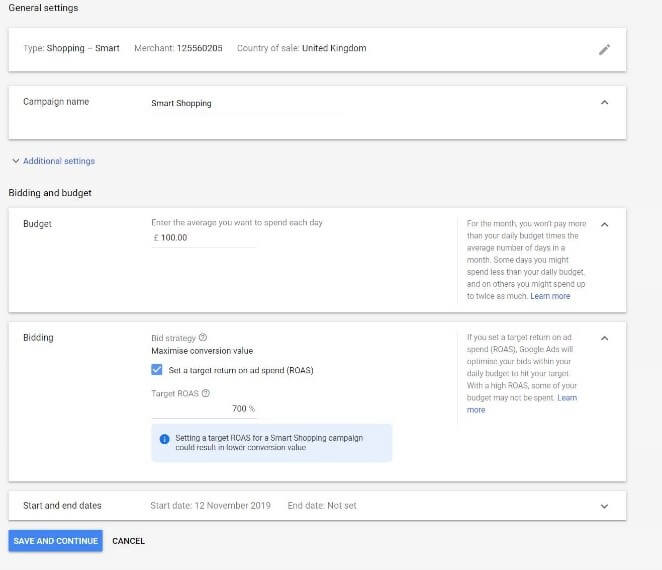
You need to take a different approach when it comes to Smart Shopping, Google say the more data the better. Instead of granular segmentation of the campaigns it is better to group products by a common goal (profit margin etc) which will give the algorithm more data to work with. Google recommends to build a campaign with product groups that have had at least 20 conversions in the last 15 days, ideally 100 in the last 30 days. If sales haven’t reached these benchmarks then it is recommended to combine product groups in order to give the algorithm more data to work with.
Strategies
Smart Shopping inevitably changes the way you will manage a campaign as there is less control over bids etc. This change doesn’t mean that Smart Shopping campaigns are less hard work, but it does mean the way you approach the campaigns should be different. In a normal shopping campaign there may be a handful of top performers which you are able to push hard by pushing the bids, there will also be some products which do not perform well on shopping which you will manually reduce the bids on. Smart Shopping is different in that it will do this testing for you and so the way you approach the campaign structure will be completely different.
If you are a small/medium company who has traditionally generated less than 100 sales a month through shopping, the best route is usually to include all products in one campaign to gather data. If Smart Shopping helps you dramatically increase sales in certain product groups, you can always think about breaking these categories out into their own campaigns in order to push these products. This strategy worked well for one of our smaller clients within the wine and spirits category, sales volume through shopping was low and so by consolidating the campaigns into 1 smart shopping campaign in order to give the algorithm more data to work with we saw a 155% increase in ROI and a 140% increase in revenue.
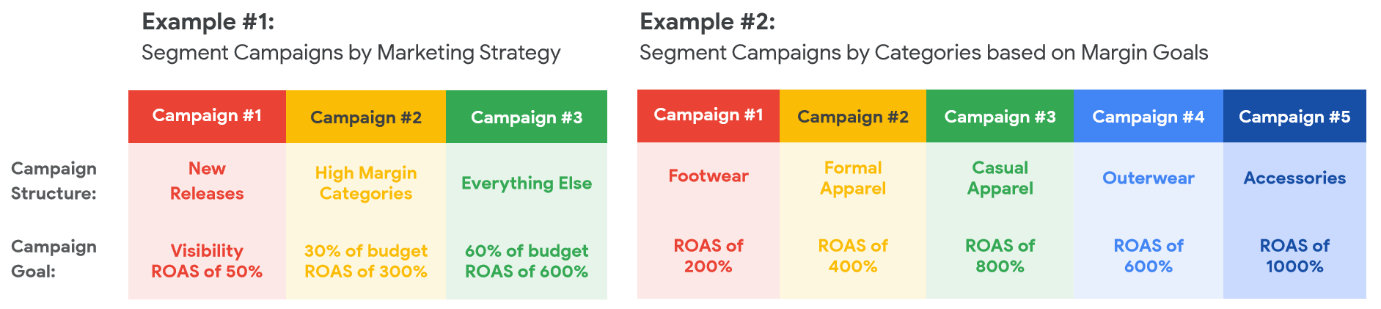
If you are a medium sized company and shopping is a bigger focus for you then a little bit more consideration should go into your smart shopping strategy, as there will be more historical data for you to look at in order to make educated decisions. Here I would look at your business goals and splitting the products out accordingly. This could be done by splitting the products into top sellers where you may be able to afford to relax the cost of sale target slightly or if you had new products on site then you could include these with a low ROAS target in order to drive visibility. We trialed this strategy by incorporating our third party CSS partner in order to mark out the top performing products where we could loosen the ROAS target, this strategy saw ROI grow by 25%, the conversion rate grow by 52% as well as the campaign accounting for a third of the total revenue made by shopping in the account.
Another approach shown in example #2 would be to segment your products by marketing goals and we have used this strategy with our large clients with big shopping budgets. This is useful in industries where you may have different ROI targets per category as some categories provide better margins than others. With this example you would create a campaign for each category, each with a different ROAS target depending on which category the campaign covered. We saw great results using this strategy in one of our accounts which has a different ROI target for each brand they have on site, leading to a 37% increase in ROI as well as a 50% increase in revenue when compared to standard shopping campaigns.
Top Tips
Feed Health
Feed health is extremely important with Smart Shopping. You should regularly keep on top of the feed and look out for any disapprovals to ensure you have as many products available as possible on the feed. Remember that the quality of the output is only as good as the data fed into Smart Shopping so it is imperative the feed is in good health.
As well as keeping on top of disapprovals, including Google product categories is also an important part of product feed optimisation, including these helps Google identify exactly what the product is in order to show for more relevant searches. You might find that impressions decrease when introducing these into your feed, however you should see clickthrough and conversion rate increase as the customers will be more relevant.
Also, be sure to include as many attributes as possible such as the colour, age and gender attributes. These help within the dedicated shopping section of Google and allow a user to filter the thousands of products found on a generic search into something quite specific. This could mean that a user could filter a generic search such as ‘jumper’ down to something as specific as ‘men’s green jumper size small’ – this leads the user down the sales funnel and makes them much more likely to purchase.
Use a CSS partner alongside smart shopping, here at Circus we utilise third party CSS providers which presents us with a wide range of benefits on our clients’ shopping campaigns. Not only does this offer a 20% off the CPC but also the feed audits and options to edit the feed allow us to optimize the product feed to help stand out in the crowded Google Shopping Marketplace.
Audiences
With Smart Shopping campaigns you may be confused as to why you can’t add audiences to the campaigns. This is because rather than manually adding in audiences in the campaign Smart Shopping will look at all audiences that you have stored in the audience manager and use the data in order to priortise certain audiences. To take full advantage of this it would make sense to create advanced audiences, i.e. not just people who have been on site, but people who have been on site for a certain period of time or people who have viewed key pages on the website. Instead of creating an audience with all converters, be more granular with this and set the audience to people who have converted and spent over the average order value – all of this data will help the algorithm deliver a better performance.
Optimisation
Because of the nature of Smart Shopping, the way you optimise campaigns will completely change. The general rule is if your campaign is overperforming in terms of ROI but you would like to drive more volume then you can raise the budgets and relax the ROAS target in order to give the algorithm more freedom to perform. If your campaign is underperforming then you can set a higher ROAS target which will mean that the algorithm will focus on people with more intent or if sales are low then you could consider combining some underperforming campaigns together to create a campaign with more products for the algorithm to test with.
Things to bear in mind
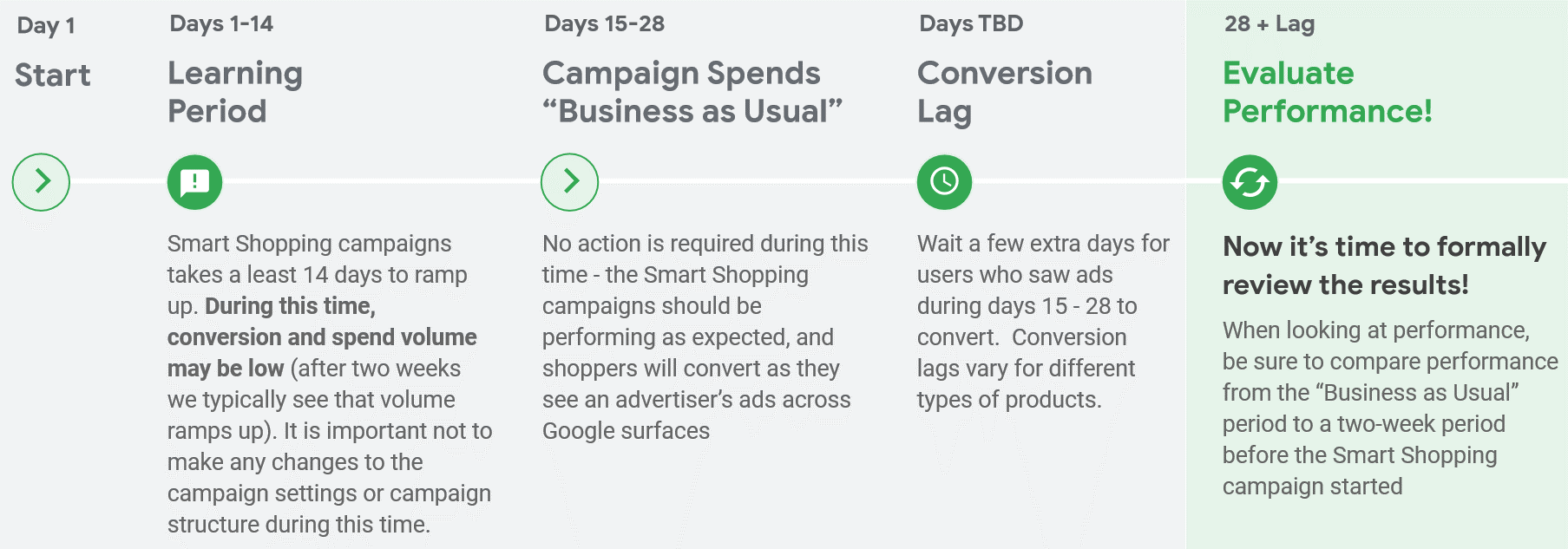
The most important thing to bear in mind is learning periods with Smart Shopping, like with all automation the algorithm needs time in order to gather data in order to give you the best performance. It is important that after setting up a Smart Shopping campaign that you don’t make any significant changes for the next 14 days as this will reset the learning period and mean that the campaign starts to gather data again, effectively setting you behind. It is then recommended to leave the campaign for another 14 days to perform before making any evaluations about the campaign’s performance. If you are in an industry which has a large conversion lag you should also add the average conversion lag time to this 28 day period before making any evaluations as this gives time for the conversions to come in.
As mentioned earlier you should also bear in mind that Smart Shopping does take away a lot of control from you, normal shopping campaigns allowed you to push products when needed – however Smart Shopping campaigns don’t allow this so will need some extra planning for seasonal peaks and more thought has to go into the strategy of the campaign because of this.
It is also worth bearing in mind that you should be realistic with the targets set when using Smart Shopping – we have seen Smart Shopping perform well, however it isn’t a miracle worker. Setting a target that is too high or a budget too low will mean that you don’t give the algorithm the room it needs in order to test and therefore you most likely aren’t going to see results. The general rule is to set a budget similar to what you have been spending in normal shopping campaigns and a ROAS target similar to what you have been seeing and then ramping this up after the learning period when you start to see the campaign performance pick up.
We have seen fantastic results using Smart Shopping with clients in a wide variety of sectors and is definitely an approach to be seriously considered with any retail focused account. There are of course drawbacks such as less control over the campaigns and the learning periods, however with careful planning these drawbacks can easily be overcome and mean that you can reap the rewards that Smart Shopping brings. Feed health is impetrative when it comes to smart shopping which is why we would advise using feed optimisation software alongside the Smart Shopping campaign to ensure the best results. The use of audiences within the audience manager section of the account also shouldn’t be neglected in order to get the most out of Smart Shopping.
For more information on Smart Shopping or on how to get the most out of your shopping campaigns, feel free to get in touch for a further discussion or a free audit of your Google Ads account.
Optimisation Tips for Amazon Ads
So you’ve successfully set up your Amazon ads account, you’ve chosen the right platform, you’ve chosen the right ads, you’re live, you’re spending money (and hopefully making money), but where do you take it from here? How do you improve the account? What do you look for and how can you improve your ROI?
Here are six tips to get you started on the right foot.
#1: Create Well-Structured Campaigns by Product Category
If you are an experienced Google Ads advertiser this is something you’ve likely already mastered. You can use your Google Ads organisational skills to structure your campaigns and ad groups with Amazon’s ad platform. The best strategy here is to have a separate campaign for each of your main product categories, and then, under each campaign create ad groups that are more specific. For example, let’s say you sell women’s sportswear; you might decide to start with three of your top-selling products:
1) Women’s workout pants
2) Women’s workout tops
3) Women’s sports bras
Under each campaign you should create ad groups centred on more specific categories. For example, in campaign #1 you might have three ad groups – women’s yoga pants, women’s running pants, and women’s lounge pants. Then you will want to create a list of relevant keywords for each ad group (I’d recommend staying between 15-30 keywords per ad group). Finally, you will craft relevant ads for each keyword grouping.
(Like with Google Ads) A solid account structure will ensure your ads are relevant, which will in turn save you money and improve your ROI. This tip is extremely critical to reap the benefits of advertising on Amazon.
#2: Create Compelling & Urgent Ad Copy
Ensure your ad text is not only accurate in terms of what you’re selling, but try and inject some creativity and humour into your ads, if possible. Standing out is more important than ever amongst the cluttered search results of Amazon. In addition, instilling a sense of urgency can also be helpful. For instance, if you are running a sale or promotion make sure to highlight this in your ad.
#3: Ensure Your Ad Copy is as Specific as Possible
Your ad copy should be very specific in terms of what you are selling. For example, if you’re selling a water bottle a consumer may want to know how many litres/cups of water it holds, if it’s BPA free, if it keeps water cold for up to a certain number of hours, etc. While it might be hard to expose all of this information in the ad text, it’s important to insert the most important information in there.
#4: Bid on Popular Brands That Sell Similar Products
Whilst brainstorming keywords to bid on, don’t forget about your well-known competitors. If you sell backpacks you should be bidding on terms like “Mountain Warehouse backpacks” and “North Face backpacks” because these are popular brands that are commonly searched for and purchased. This will allow you to gain exposure and pursue someone to buy your much cooler but less well-known brand name backpack.
To find your key competitors, do a generic search on Amazon for products in your vertical – say, “backpacks” – and see which brands come up the most in your search results.
#5: Experiment with All Three Ad Formats
While sponsored product ads might appear to yield the fastest and most visible ROI, sponsored brand ads might lead to more loyal, repeat buyers. It’s worth experimenting with all three ad types to see which yields the highest returns, and then once your statistics paint a clear picture you can re-allocate your budget based on the results of your campaign.
#6: Use Negative Keywords & Be Conservative with Match Types
Just like when advertising on Google, negative keywords are key to reducing wasted spend. For example, if you’re selling musical flutes, and bidding on the keyword “flutes” with broad or phrase match then someone could type in champagne flute and your ad could still show. If they then accidentally click on your ad, you’ll be charged for a click from someone searching for a £10 glass rather than a quality musical instrument.
It can also help to be more conservative with your match types, staying clear of broad match, and putting a higher emphasis on phrase and exact match. However this will vary by goal and campaign.
There’s much more to explore in the world of Amazon advertising, and I’d predict that the platform is only going to grow its scope of tools. In the meantime use these helpful tips, optimise, grow your ROI and, as always, for any further help with Amazon or anything else PPC related please feel free to get in touch with myself or the team and we will be happy to help.
Getting on with Amazon Ads
Are you selling a tangible product that consumers can purchase online? If the answer is yes, then you should be advertising on Amazon! Amazon will supply you with another way to get more eyes on your products, and likely more buyers.
If you’re all over Google Search, Shopping, the Display Network and Bing then there’s no better time to break into one of the largest remaining online ad networks. For e-commerce businesses, Amazon ads should be a no-brainer & if you’re not on Amazon shopping, your competitors most probably are!
If you are hesitant, you can start small with a product that you already know sells well. For instance, if you sell sports gear and football shirts have always been your top selling online product, start with an ad for your top selling shirts. Once you start to see an ROI, incorporate more brands and types of rackets to expand your campaign.
Another reason to advertise on Amazon is that if you’re doing Amazon PPC, your organic Amazon rankings will likely improve as well. We have seen that organic ranking has been considerably improved for those keywords that were used successfully in Amazon PPC ads. This is in part due to extra sales that have been generated by these ads which then enhance the sales history of the product. Sales history is a very strong ranking factor. If a product sells better, then Amazon will place it higher up in the search result rankings.
Not only is it possible to boost your product sales by investing in Amazon ads, doing so could also boost the organic rankings of your products.
So how much do ads on Amazon cost?
From the analysis that we’ve completed, the average cost per click on Amazon is rarely more than £0.35, making it more cost-effective on a CPC basis than search ads on Google or Bing, and it is also comparable to some of the lowest CPCs on Facebook Ads or Google Display. Considering that Amazon searches show a lot of commercial intent, those are very promising numbers!
Self-Serve Ads vs. Premium Ads:
When you begin exploring Amazon’s public advertising information pages you might be a bit confused regarding the difference between self-serve and premium ads. The simplest way to explain the difference is that self-service ads function like Google search ads displaying on the search results pages, where premium ads function more like display ads. While premium ads can still be found on Amazon, they show up as a visual banner and side bar ads. They can also appear on some other websites, similar to how Google’s Display Network works.
Getting Started with Amazon Ads:
To start advertising you’ll first need to sign into your seller or vendor account. If you don’t have either of these accounts you can check out their various pricing and plans to fit your needs here. If you’re a first party seller then you’ll want to sign-up as a vendor, which is by invitation only. If you’re selling via Amazon Seller Central you’re considered a third-party seller. Seller Central has pricing options for pay-as-you go, for independent sellers vs. a pro option for those generating a higher sale volume. Pro merchant sellers also have the option of allowing Amazon to manage shipping, returns, and customer service, which is not a bad perk! Lastly, Amazon has a Vendor Express option that might be worth exploring if you’re interested in utilising the vendor route, but are lacking an invitation.
Once you’ve signed up for the correct plan, you can log in to your Amazon account and start setting up your ad campaigns!
Types of Amazon Ads:
So you have some nice banner ads for branding purposes from your creative team that you would like to promote, but you are also looking to simply generate more online sales with Google Shopping style ads. Luckily you’ve come to the right place because Amazon provides these options! There are three main types of ads you can configure through Amazon including sponsored products ads, sponsored brand ads, and product display ads.
Amazon Sponsored Product Ads:
Sponsored product ads operate in a similar way to ads run through the Google Shopping Network. These are the ads that drive searchers directly to a specific product you are selling on Amazon.
When shoppers click on your sponsored product ad, they’ll be directed to the product detail page. Sponsored product ads are usually displayed above or below the search results page, as well as on other product detail pages. Ads are keyword targeted & advertisers have the option of choosing from exact, phrase, or broad match types. Advertisers can also control the daily budget, as well as the campaign duration. Whilst the campaign can be paused at any time it must run for at least 1 day.
Sponsored Brand Ads (formerly called Headline Search Ads):
Sponsored brand ads display in the search result pages as headline banner ads and always above the result listing. These ads are on a cost-per-click basis, & lead searchers to any specified page on Amazon. This landing page is typically a customised branded page.
These ads are also keyword targeted and can be used to promote three or more products together. Sponsored brand ads use a cost-per-click method where the minimum bid per keyword is £0.10. There are only two keyword match types supported for sponsored brand ads – exact and phrase match. Lastly, the minimum campaign budget for these ads is £100, with a limit of £1 spent per day. These campaigns can be scheduled to run up to four months in advance.
Amazon Product Display Ads:
Product display ads work a bit differently than the two ad formats above. These ads are interest or product targeted display ads and drive shoppers to the products detail page. They are also priced by a cost-per-click method.
Advertisers can select from a long list of products (for example, similar products to what you are selling) or interests (for example, if the consumer is interested in running) to target these ads to relevant shoppers. It is important to note that each campaign is limited to one target type. These ads can appear to the right or at the bottom of the search results, on the customer reviews page, at the top of the offer listings page, as well as in Amazon marketing emails.
So there we have it, these are the basics in deciding your approach and the necessary considerations when setting up an Amazon Ads account.
For any help with Amazon or anything of your other PPC needs, please feel free to get in touch with myself or the team and we will be happy to help.