


There’s no denying that the more we rely on AI, the less of our ‘soft skills’ we need to use. Whilst no more hours spent making sure our email matches the *perfect* tone or manual call note-taking sound idyllic, there are some things that AI certainly can’t – and shouldn’t – replace.
In fact, there’s something to be said about going back to basics, rediscovering the importance of human connection, and resolving conflict with frank, open and honest conversations (which aren’t supplemented by AI!)
Client Services Director, Anna Wood, recently spoke at The Performance Academy X Autotrader event in Manchester, sharing her tips for conflict resolution and communication – which importantly, aren’t only useful in a professional environment, but in any scenario where relationship-building and collaboration is involved.

Conflict Resolution: 3 Tips for Successful Communication
There’s no one-size-fits-all approach to communication – and of course, this depends on the person and how they also like to communicate. However, there are some things that are really simple, but really effective, when it comes to having productive conversations that drive conflict resolution and lead to positive outcomes.
Listen
Conversations aren’t just about speaking, and are equally (if not even more so) about listening to the other person.
Some of the ways that you can show that you’re engaged and actively listening include allowing the other person to vent their frustrations; asking questions to help you to understand the problem further; using your entire body (such as open body language) to display interest and care; taking notes to show your intent to follow-up; and reconfirming the core goal of the conversation to prevent further miscommunication and ensure everyone involved is aligned.
Be Transparent
Transparency looks different from just being honest (but this is important too), and should be something integrated into your relationships, rather than just used when it needs to be.
Being transparent might be avoiding sugar-coating to provide more and better clarity and honesty; owning your mistakes when you’ve genuinely made one, building credibility and respect; setting realistic expectations to prevent future disappointment and avoid setting anyone up for potential failure; remain consistent in your approach to display and inspire confidence; and following up to make sure you show reliability and intent to act on what has been discussed.
Don’t Fear The Phone
Phone calls get a really bad rep, and I can guarantee that the majority of people would much prefer to send a text or an email – but why?
Picking up the phone is a display of confidence and proactivity, and ultimately – gets the job done quicker! One conversation over the phone could take 5 minutes, whilst the same conversation over email could take 5 days! The willingness to pick up the phone can help build relationships and trust, and also promotes transparency, with no time spent figuring out if a tone, or even a word, used over email is negative or not.
My Key Takeaway
It’s okay to go back to basics, and sometimes – it’s neccessary.
We do rely on AI a lot, which can be great. But, AI hasn’t always existed, and leaning on the skills that we already have is what can propel us to build great partnerships.
Looking for your perfect PPC partner?
What are GCLIDs and how can they improve PPC performance?
As a PPC Agency, we’re always looking for ways to squeeze every last drop of performance out of our clients’ campaigns. And when it comes to understanding exactly what’s working (and what’s not), one unsung hero often gets overlooked: the GCLID.
So, what are GCLIDs? Let’s dive in.
What Are GCLIDs?
GCLID stands for Google Click Identifier. In simple terms, it’s a unique, automatically generated tracking parameter that Google Ads adds on to the end of your landing page URL every time someone clicks on one of your ads.
You’ve probably seen them without even realising it – those long strings of letters and numbers that appear after a question mark in your URL.
Contrary to what some might think, this isn’t a random jumble of numbers and letters – it’s a powerful identifier that acts as a digital fingerprint for that specific ad click.
How Do GCLIDs Work Their Magic?
The real power of a GCLID lies in its ability to bridge the gap between your Google Ads account and your analytics platform. This connection is usually enabled through ‘auto-tagging’ in Google Ads, which we highly recommend for all our clients.
How do GCLIDs work in practice? Well, when auto-tagging is enabled:
- A user clicks on your Google Ad.
- Google Ads automatically generates a unique GCLID.
- This GCLID is added to your landing page URL.
- When the user lands on your site, Google Analytics reads the GCLID.
- Google Analytics will then associate all the user’s actions on your site (page views, time spent on site, conversions etc.) with that specific GCLID.
- Importantly, it also links back to all the detail from Google Ads such as the exact campaign, ad group, keyword, and even the specific ad creative that generated the click.
Without GCLIDs, Google Analytics would still track traffic from Google Ads, but it would lack the granular detail to tell you which ad, which keyword, or which campaign was responsible for a conversion. It’s the difference between knowing someone came from ‘Google Ads’ and knowing they came from ‘Google Ads > Brand Campaign > ‘Your Brand’ Keyword > Responsive Search Ad Headline 3.’
Using GCLIDs To Improve PPC Performance
Now that you understand what GCLIDs are and how GCLIDs work, let’s talk about using GCLIDs to actually improve your PPC performance. This is where the magic happens for us PPC experts!
Pinpoint Conversion Attribution
This is the big one. GCLIDs are fundamental for accurate conversion tracking. By connecting clicks to conversions, you can definitively see which ads, keywords, and campaigns are driving actual business results. This means you can confidently reallocate budget to your top performers and pause underperforming campaigns.
Richer Analytics Reports
Forget generic traffic sources. With GCLIDs, your reports become incredibly detailed. You can segment data by campaign, ad group, keyword, match type, device, and more, all within Google Analytics. This allows for deep dive analysis into the user behaviour associated with specific ad interactions.
Unlock Offline Conversion Tracking
For businesses with longer sales cycles or offline conversions (e.g. phone calls from your website, in-store visits after an online click, CRM-tracked leads), GCLIDs are invaluable. You can capture the GCLID at the point of click, store it, and then upload offline conversion data back into Google Ads, giving you a full-funnel view of the transaction. This is a game-changer for demonstrating the true value of your PPC efforts.
Refined Remarketing Audiences
While Google’s systems are smart, using GCLIDs indirectly helps create highly relevant remarketing audiences. The more precise data you have on user interactions (thanks to GCLIDs), the better you can segment your audience for future retargeting campaigns.
Data-Driven Optimisation
Every bit of data GCLIDs provide feeds directly into your optimisation efforts. Want to know if mobile ads for a specific keyword are converting better than desktop? GCLIDs help you get that answer. The granular insights allow for informed decisions on bidding strategies, ad copy refinement, landing page improvements, and audience targeting.
How To Use GCLIDs Effectively (Auto Tagging Is Your Best Friend)
For most advertisers, using GCLIDs effectively comes down to ensuring auto-tagging is enabled in Google Ads.
To check if auto-tagging is enabled:
- Sign into your Google Ads account.
- Click on ‘Tools and settings’ in the top menu.
- Under ‘Measurement’, click ‘Conversions’.
- Click on ‘Settings’ in the left-hand navigation.
- Look for ‘Auto-tagging’. If it’s not enabled, click the toggle to turn it on and save your changes.

Why is auto-tagging so important?
It eliminates manual errors and ensures consistent, accurate data collection. Trying to manually tag every URL would be a nightmare and prone to mistakes, leading to incomplete or incorrect data – which is worse than no data at all when it comes to making informed decisions!
Unleashing The Power Of GCLIDs For PPC Success
PPC moves quickly, so having accurate, detailed data is essential. GCLIDs are the unsung heroes that power this data, allowing PPC experts and businesses to truly understand campaign performance, attribute conversions correctly, and ultimately, drive results.
If you’re running Google Ads and not leveraging the full power of GCLIDs, you’re missing out on vital insights that could be transforming your PPC performance. Set it up, start analysing, and watch your campaigns thrive!
What Is AI Mode And How Will It Affect PPC?
Recently, at both Google I/O and Google Marketing Live, AI Mode was introduced as a new and improved era of search. But, what is AI Mode? And how will it affect PPC?
Client Services Director and PPC expert, Anna Wood, explores the challenges that advertisers face with AI mode, and the ways they can adapt to make sure that this change doesn’t wreak havoc on their PPC results.
AI Mode: What Is It And Why Does It Matter?
AI Mode is changing the way that businesses can and will be discovered and engaged with at each stage of the customer journey. Rather than providing a similar SERP for everyone using the same query, Google will use past data to get to know the individual searching, using this to build and deliver a super-personalised results page that knows exactly what the user is looking for.
Forget about basic demographics – location, gender, age. Google is using everything it has to understand and predict individual search behaviours to become a bespoke search engine. From your search history to your Gmail account, and even your Fitbit activity – your online identity, profile and behaviours will inform everything you’re shown when you search on Google.
What Is AI Mode Changing For PPC Experts?
PPC is , of course, set to be affected by AI Mode, with new challenges arising that advertisers might not have previously considered.
Anna shares the challenges she believes PPC experts need to be aware of, and her solutions to ensuring that they don’t hinder PPC performance.
Read more of our thoughts from Google Marketing Live 2025.
User Behaviour Shift
Challenge: Users might rely more on AI summaries instead of clicking on ads, leading to a lower CTR and fewer clicks to your website.
Solution: Adopt a multi-pronged approach across Google’s networks. Lean on Performance Max, Display and Demand Gen to ensure ads are placed on other networks to capture demand and drive users to the website from multiple places through more visual formats such as images and videos. These types of ads allow for more creativity and can be more eye-catching, which is great for more visual products.
Solution: Shift ad copy to be more intent-driven by thinking of solutions to commonly searched customer problems that can help tailor ads that compete with AI summaries.
Limited Ad Real Estate
Challenge: AI overviews could reduce the number of ad slots, pushing ads down and decreasing visibility, all whilst increasing CPCs as a result of heightened competition.
Solution: Focus on optimising ads to improve quality score. Higher QS = higher ad positions and lower CPCs.
Solution: Diversify beyond the search network. Display, Performance Max, YouTube and Demand Gen campaigns can reach users at all stages of the research funnel, and often see lower CPCs.
Murky Attribution
Challenge: AI responses blend information from multiple sources, making it harder to track the entire user journey.
Solution: Leverage first-part data to rebuild visibility into the customer journey. By using CRM data, Enhanced Conversions, Customer Match Lists and offline imports, we can more effectively match conversions back to campaign performance.
Emphasis on Brand Trust
Challenge: Users engaging with AI content might become more selective about the sources or brands they trust, making it harder for unknown brands to convert clicks into sales.
Solution: Ensure trust signals are pushed and prioritised across multiple content formats – on your website, in your ad copy, and with reviews, case studies, and customer success stories.
Solution: Use multiple ad formats to display a strong brand image and messaging. Using a mix of ad types and campaign objectives (e.g. awareness) will help connect with users further up the funnel, establishing the brand name.
Meet The Team – Anna
Client Services Manager, Anna Wood, celebrated her 5 year anniversary working at Circus this year, and was previously a PPC Team Leader before taking on a role in Client Services.
Find out more about Anna here…

Name: Anna Wood
Date Started at Circus: February 2017
What first made you want to pursue a career in PPC?
I had a friend who worked in PPC, and when he described some of the technical parts of the job like handling big data sets, analysing all the numbers and becoming a wizard on Excel I geeked out big time and loved the sound of it so looked into it further.
What’s your favourite thing about working at Circus?
We have a great team, I laugh every day. Half the time at my own jokes, but that still counts right?
Who is your dream client?
A likeminded client who has great ambitions, similar working styles as us and an understanding approach (…PPC can have it’s ups and downs). I love eating and drinking out, so if a really nice restaurant group fit into that then they’d be the dream.
If you could solve one PPC issue forever, what would it be?
100% accurate visibility over sales attribution. Understanding user journeys provides better insight for crediting campaigns, or channels if we take more holistic approach.
What’s your dream holiday destination?
I love Japanese culture, style, food, so I’ve always wanted to visit – Tokyo is up on my list.
What would your desert island meal be?
Something hearty and homecooked like a Bolognese, with half a block of cheddar grated on.
Tell us something about you that might surprise people.
I’ve almost managed to time-travel… I went almost 12 months thinking I was a year younger than I was.
If you could guest star on a TV show, which one would it be and why?
Takeshi’s Castle because it’s absolutely nuts.
Home or Office?
Home
Morning or Evening?
Morning
Dog or Cat?
Dog
Countryside or City?
City
Spender or Saver?
Spender
Coffee or Tea?
Coffee
Summer or Winter?
Summer
2020 Vision
Your 2020 vision? You want to see decent growth, you want to achieve new heights and you want to be successful as a business and provide excellence service for your customers… but where do you start?
OK, let’s think about what’s important to your business. Where do you want to be this time next year? How are you going to achieve that? With so many questions to answer and factors to consider, planning your 2020 strategy can seem like an overwhelming task but not to fear, we’ve broken down some of the most important thinking points for re-strategizing.

Realistic goals & objectives
- What do you want to achieve?
- This is the foundation for the rest of your planning, and therefore needs to be clearly defined and easily measurable. Whether you’ve got new product launches, want to drive a higher yearly profit or gain stronger brand awareness, the plan needs to be thorough in order to take next steps to develop it.
- Where/who are you going to target?
- You’ll already have a good knowledge of your target audience, but should you be thinking outside the box a little more? With millions of customers and placements at your fingertips and hundreds of marketing tools and programs available, mass reach is more achievable than it ever has been, so definitely make use of what you can to unlock the door to potential new customers.
Budgets
- Have you got a specific marketing budget for the year?
- As a data-driven marketer, you may face the challenging task of reviewing historical figures and calculating new budgets. Analysing how the distributed budgets performed and which areas are more profitable for your business are vital for getting the best return from your investment. This is where your objectives come back in to play; if your objective is increasing brand awareness and you’re consistently seeing strong brand uplift from running online ads, you should be thinking about increasing that budget split.
Peak times/seasonality
- Have you thought about upweighting around seasonality/peak times?
- During the budget planning process you may be creating projections for spend month on month, or by quarter, etc., which will have to incorporate uplift/downturn based on seasonality. If your business performs better during a certain month, a well-thought-out plan will capitalise on this, ensuring you’re providing fruitful results.
- How are you preparing for the low times?
- Similarly to when you’re pushing the peak times, you need to consider strategy for the quieter periods. Many marketers will tend to pull back around these times, but it could also be an opportunity to keep your brand name out there so when peak times come around you’ve generated an enlarged audience list.
Offers & promotions
- Promotions tend to go hand in hand with seasonality. We see most of our ecommerce clients run a sale around peak times (e.g. Black Friday, Boxing Day sales) when intent-to-buy is high and competition fierce. However, one of our other clients runs discounts all year round but they have to think about which of their products sells best at which times of the year and be more aggressive with those offerings.
- Last year £23.6b was spent on online advertising, making it 57% of the market’s ad spend. Online ads in 2020 is forecast to make up to 62% of all UK ad spend, meaning there’s increasing competition. Have you thought about how you want your brand to appear against your competitors? Customers are more likely to invest in your business if there is a real reason; USPs, promotions, etc.
- If you’re interested in reading more about how to prepare for peak times, read our previous blogs for hints and tips.
Cohesive marketing strategy
- Which channels are you looking in to?
- It’s easy to think of all channels individually, but this isn’t necessarily the best way to get the most out of them. We’ve always seen our clients benefit from drawing up a full digital marketing strategy that takes all channels into consideration. Again, this loops back to what your end goal is; different channels can achieve different results, but they’ll all play a part in providing a smooth journey for the customer, whenever they are exposed to your brand
- How are you going to align all your marketing activity?
- Things like your content, product releases/promotions and brand representation should all be aligned, no matter the channel. Stories and messaging should be marketed using a range of media to best capture the right audience at the right time for the unified image that your brand requires.
Expected platform updates
- Have you considered what these changes might have on your business?
- As we rely more and more on software, search engines and machine learning, it can be easy to look past how the platform updates may directly affect you. 2020 marketing trends are set to incorporate more personalization, smart bidding, increased video advertising and interactive media so be sure to keep your eyes peeled for more platform updates surrounding these.
- Whilst it’s near impossible to predict the exact changes, we do have a general understanding of what’s to come, particularly with PPC:
- Audience list expansion
- Continuous work on increasing list size and improving quality
- More options for niche audience targeting
- Keyword match type changes
- These have been changing a lot over the last year, with keyword match types becoming more unified for search queries
- Can affect PPC strategy as keyword choice is more limited
- Automation
- This affects forecasting, and manual strategy based on seasonality e.g. no CPC estimates available for automated bidding strategies, so can’t base spend projections on these
- Audience list expansion
2020 planning is going to be a substantial operation, but it doesn’t have to be a painful one. Taking time to allocate budgets and create projections for your unified marketing strategy should help you on your way to becoming a 2020 visionary. We can’t tell you what your strategy will be as that’s entirely unique to you, but we can help you implement your new PPC strategy. Get in touch today for a friendly chat or free audit of your account.
Post-Prime Day; Analysis, Predictions & PPC Planning For Next Year
Amazon Prime Day has quickly become one of the biggest days of the year for the online retailer. Launched in 2015, the event marked a celebration of the 20th anniversary of the site but it’s now in its 5th year and longer than ever.
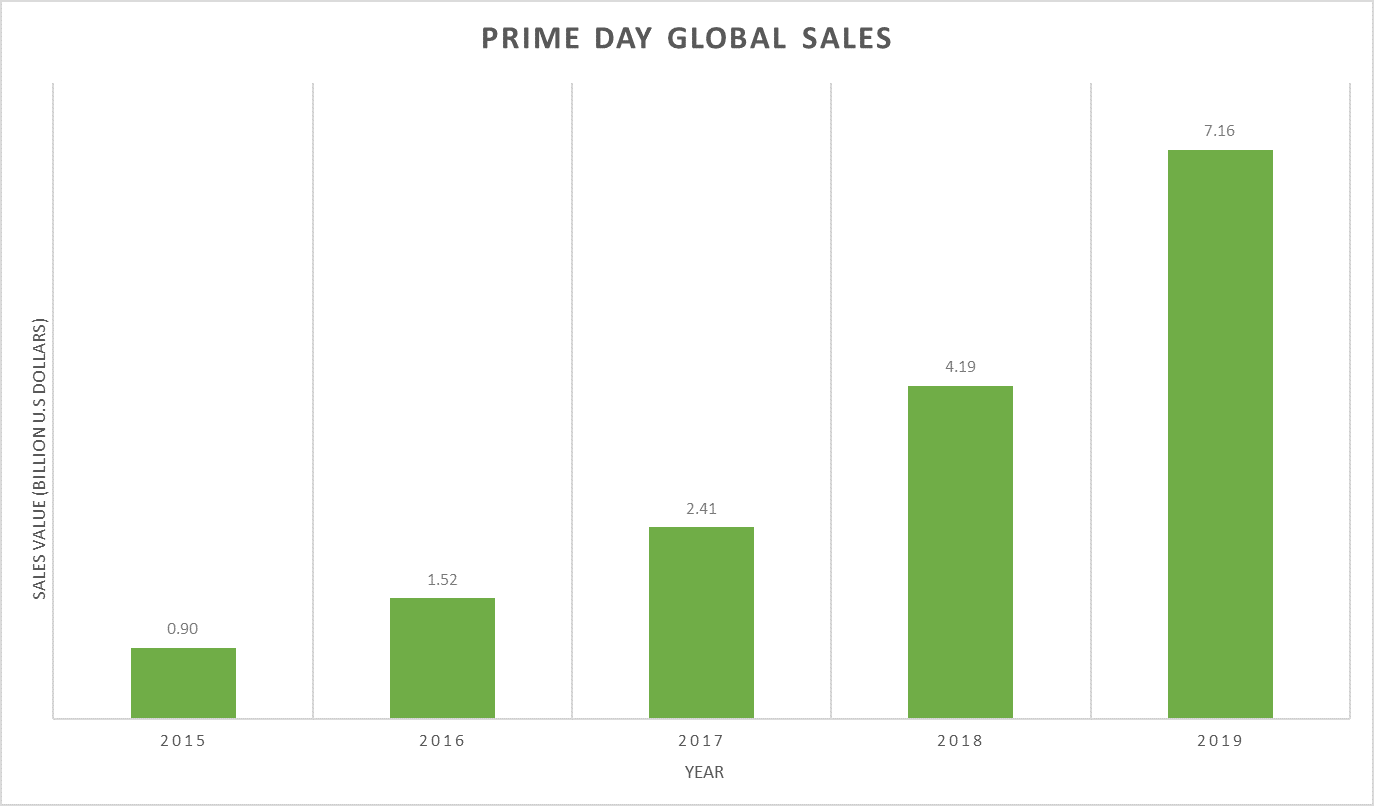
This year’s Prime Day event took an estimated $7.16 billion from over 175 million items, a 71% increase in sales value compared to 2018. Beating both Black Friday and Cyber Monday combined, this year’s event has been described by Amazon as “its biggest shopping event in history”.
Analysis
With over 100 million Prime members globally there’s a huge pool of opportunity for advertisers over the Prime Day period. We developed tailored strategies with our clients in order to reach the right members at the right time, to which we saw profitable results.
A client specialising in white goods saw the following results vs previous weeks;
- Week on week there was 1147% increase in impressions
- Bids were increased but we ensured all budget caps were lifted to allow for the natural uplift in traffic
- Tuesday saw a higher volume than Monday which wasn’t much of a surprise due to a higher sense of urgency with offers ending
- The account recorded the best day on record for revenue
- Compared to most recent peak times it saw 77% more revenue driven than Black Friday and 156% more than Boxing Day
- As expected, CPC rose following our aggressive bidding across the account
- However, this was counterbalanced by our average order value increasing by 30%, meaning each sale was more valuable
- Click-through-rate took a bit of a cut, sitting 40% under where we were in the lead up to that week
Overall during Prime Day, we generated 892% more revenue compared to previous weeks at an ROI of just under 1000%, a huge couple of days for sales.
However, it’s important not to forget other marketing channels during this time. We have seen affects of Prime Day amongst our accounts as a result of the natural increase of users online. The same client saw a 32% increase in Google traffic, but conversion rates dropped off by around 50%. Customers find deals on Amazon, perform research on the brand’s own site, then return to Amazon to buy the product at sale price as it’s not discounted on site. So, despite driving huge revenue through Amazon, you may want to consider options for your other channels in order to not let them suffer during that period.
Predictions
Despite seeing record highs for Prime Day, we may eventually start to see some saturation as rival sites capitalise on what is now an established peak time for retail.
There’s a halo-effect on ecommerce as a whole, as the event provides free marketing for other retailers who are starting to showcase their own competitive offerings. Multiple sources have predicted that revenue could lift up to 80% for non-Amazon retailers during the Prime Day period, so definitely one to incorporate into the wider PPC and marketing strategy.
Nonetheless Prime Day will continue to see revenue growth within the Amazon platform, most definitely entering double-figure-billion territory in 2020.
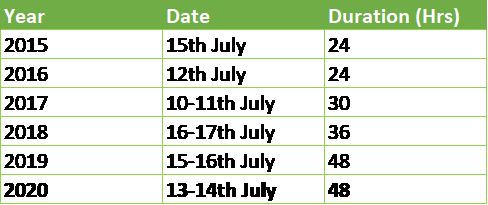
Although day of the event has changed over the years, it’s kicked off on a Monday since 2017 and through Tuesday where it’s increased to over 24 hours.
Our prediction for next year is a 48-hour event running from 13-14th July.
Planning for next year
Amazon hosts a number of deals all year round, but these two are particularly important for Prime Day preparation:
- Deals of the Day (deal that lasts 24 hours)
- Lightning Deals (limited time and limited stock offers)
One step which seems the most obvious, but many retailers fail to set up early enough, is sorting these discounts on products. Once you’ve decided how many and what your deals are going to be, you’ll need to register them with Amazon; there is a criteria that your products need to hit, followed by a reviewing process for approval.
Increasing your bids and budgets comes next. Planning how much to set bids at should be based on your value per sale against the expected uplift in conversion rate. Depending on what your main aim for this peak time is, you can then go on to continue increasing bids (which may end up being necessary anyway should your competitors ramp their bids harder).
As we know Prime Day traffic drives traffic with higher intent-to-buy so capturing as many clicks as possible from the right kind of users is imperative. With CTR potentially dropping 50% you’ll need to take a very targeted approach when prepping your account. Using the most relevant products, keywords and thorough negative keyword lists will help this.
Conclusion
Live across countries in USA, Canada, Europe & Asia, Prime Day is now a globally recognised peak time for retailers and with the numbers speaking for themselves, this event has quickly become Black Friday’s Q2 counterpart. Amazon’s event is no flash-in-the-pan, but a prime opportunity for online marketers to take advantage of the organic lift in online traffic and boost sales, whether they are live on the platform or not.
With the Amazon Advertising platform steadily becoming one of the bigger players in the online advertising world, PPC has become a huge part of retailers’ strategies
With their advertising platform steadily becoming one of the bigger players in the retail PPC world, retailers are now weaving this into their Amazon strategies more and more. Amazon’s newer targeting options have increased ways for your products to be seen, thus gaining more exposure to new users. No doubt there will be new feature releases on the horizon that will be advantageous for Prime Day 2020.
If you are wanting to prepare your Amazon strategy for next year and don’t know where to start, don’t hesitate to get in touch.
Top Tips for Boxing Day PPC Success
With its immense hive of online activity, Black Friday is one of the busiest days of the year for a PPC advertiser. With millions of internet users eagerly shopping with higher intent to buy, it’s important you try to capture that valuable traffic. However, if for whatever reason you missed this, fear not! Christmas and Boxing Day are just around the corner, and we’ve got some top tips for ensuring you’re ready:
Key Dates
- Dec 25 – Christmas Day
- Dec 26 – Boxing Day
- Dec 27-31 – Year End sales
Top Tips
- Prepare in advance by capturing the top of funnel traffic
- People are already researching the best Christmas deals and even what to expect when Boxing Day sales go live
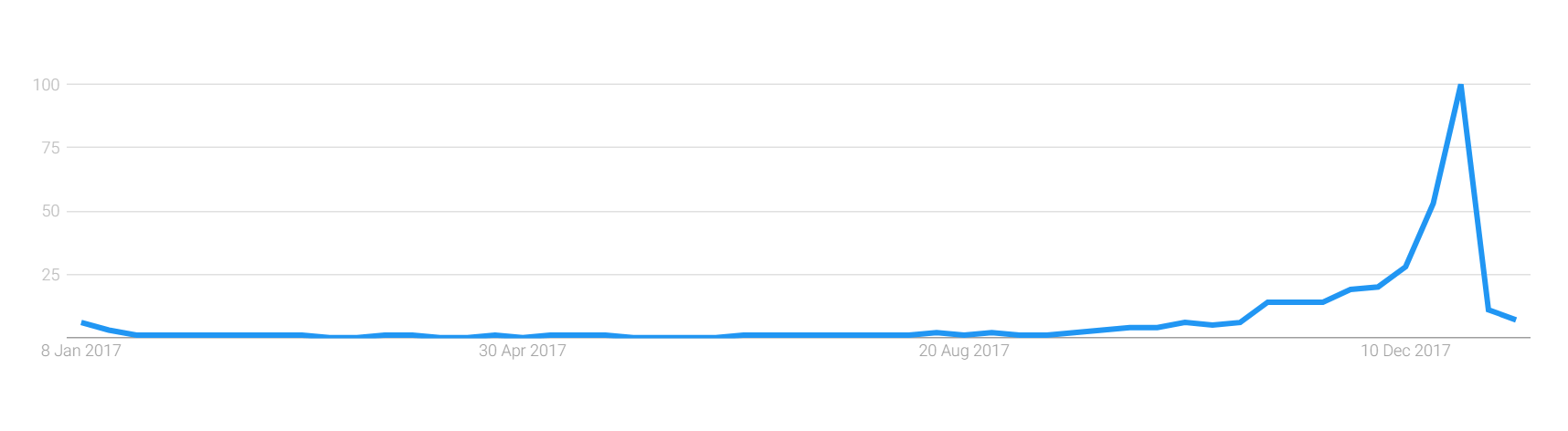
- Terms such as ‘Christmas sales’ are searched for as early as October, as you can see in the graph below taken from searches on Google last year
- Review your ad scheduling & device bid adjustments
- It’s important to make sure you’re appearing to your audience at the right hours of the day and days of the week
- Use historical data to plan how aggressive you want to be during peak times
- There will likely be high traffic volume from mobile devices, especially when people are in the research stage, so it’s imperative to capture this
- Make sure your ad copy is up-to-date
- Do you want your ads to contain promotional-based copy? If you’ve got strong sales or activity going on within the business, this could be used as a powerful USP
- Ads may also seem more relevant if seasonal ad copy is used, so try to tailor your words as much as applicable
- Be sure to make use of the larger Expanded Text Ads, with 3 headlines and 2 description lines
- Get the most out of your ad extensions
- Offers such as free delivery & 24hr customer service are great USPs at this time of year and should be displayed as additional information alongside your ad
- If calls are important to your business, ensure call extensions are live
- Use themed landing pages
- This may not be essential for every business, but using a themed landing page can provide a better experience for the user
- For peak periods like Christmas/Boxing Day, a seasonal landing page may be more likely to meet the expectations of what the user is searching for
- Ensure to align your ad copy with your landing page to give a more consistent journey
- Make Use of Google Ads’ Features
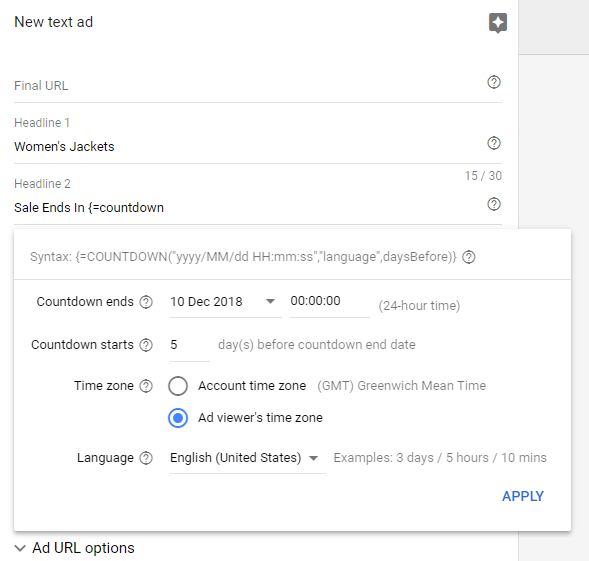
- Countdowns
- Highlight your upcoming event or sale by inserting the countdown formula into your ad copy
- You can use them to count down to a sale and give users a solid reason to return, or to add a sense of urgency when a sale is coming to a close
- Countdowns
- Remarketing lists & seasonal audiences
- Returning customers are more likely to convert, so make sure you’ve applied your RLSA lists where possible
- Review historical performance to set bid adjustments
- Look out for Google’s seasonal audiences; lists of users who are actively researching or showing interest in online seasonal events such as Christmas and Boxing Day sales, and therefore valuable to your business
These are just some of the ways in which you can assure your campaigns are Christmas-ready. Making the most of the ad space and the extensions is an essential first step in getting your seasonal message to the user, but you’ll still need to make all the checks to guarantee you’re appearing to the right people at the right time.
We can help you create a tailored PPC strategy for your business this Christmas. Get in touch for a free audit.
Facebook Ads for Lead Generation: Case Study
Did you know that every second there are an estimated 20,000 active users on Facebook? That’s a whole online world of potential custom that you could be missing out on if you aren’t using Facebook Ads.
Facebook Ads is a platform designed to provide results depending on your business objective. Reach, app installs, video views, conversions and catalogue sales are just a few of the options available for you.
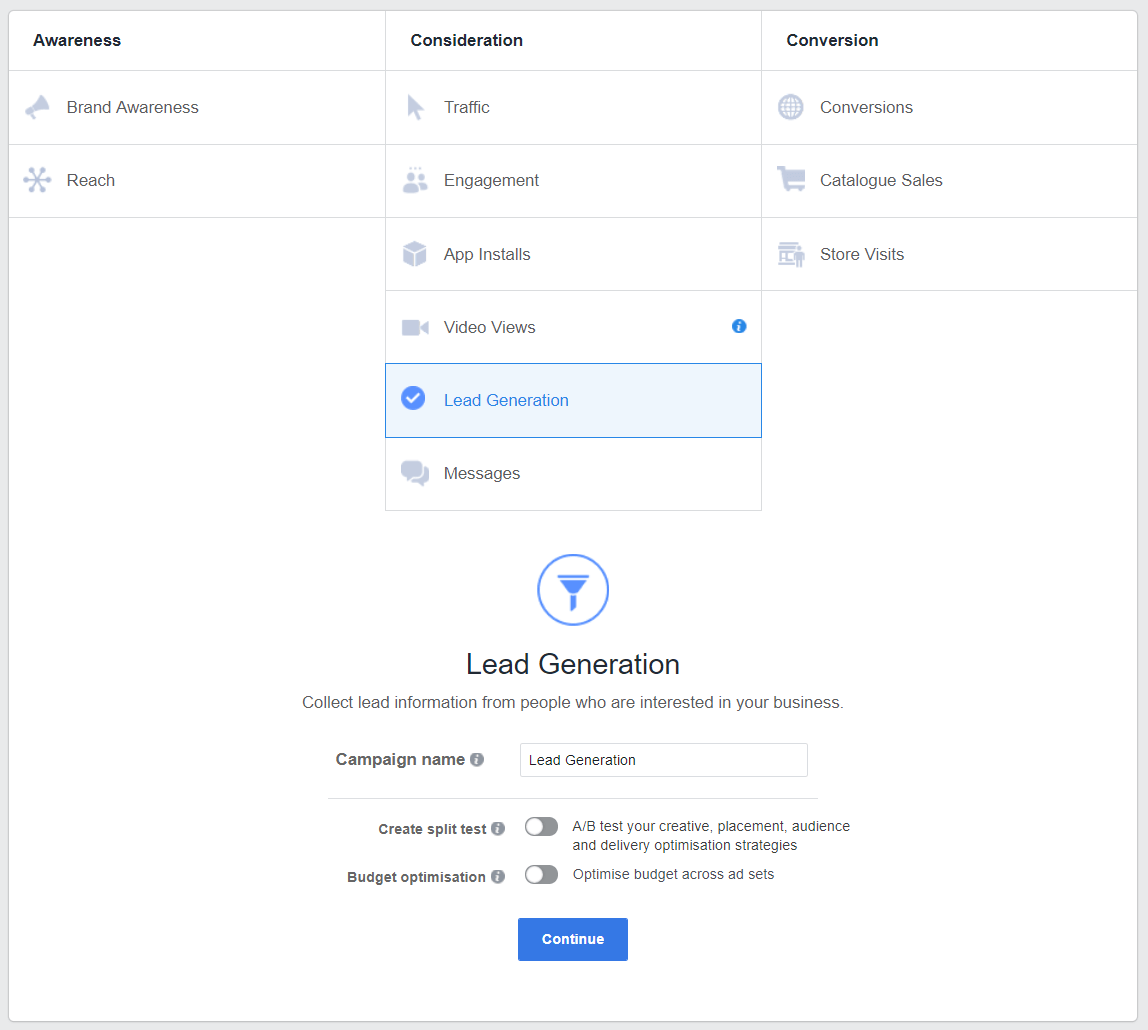
We conducted a test using Facebook Ads’ ‘Lead Generation’ campaign type, which I will be sharing the results of in this blog.
The lead generation campaign allows you to collect lead information from people who are interested in your business. Rather than having a primary focus on driving users to convert on your website, they are encouraged to leave details (such as name, phone number, and email address) on the lead form on the ad itself.
Some of the benefits of these campaigns are:
- Multiple targeting options mean you can show your ads to a more concentrated audience based on factors such as age and gender, location, interests and behaviour
- Customised questions: get answers to self-written questions to obtain more specific information relevant to your business
- Contact information that the user has already shared with Facebook is pre-populated, which also makes for much more efficient mobile lead generation
- You can sync to your CRM to receive the lead form submissions immediately
Case Study:
The account used was a lead generation client looking to launch a short-term test campaign to increase their volume whilst keeping CPL under £5, so our main aim here was to drive as many leads as possible within given time constraints and locations.
When we initially set up the campaign we were required to create one ad set with a radius target around a location, expanding out to multiple other locations depending on performance.
With this in mind we used an ad set per location, targeting an audience that showed interest in topics relating to the business.
Week 1
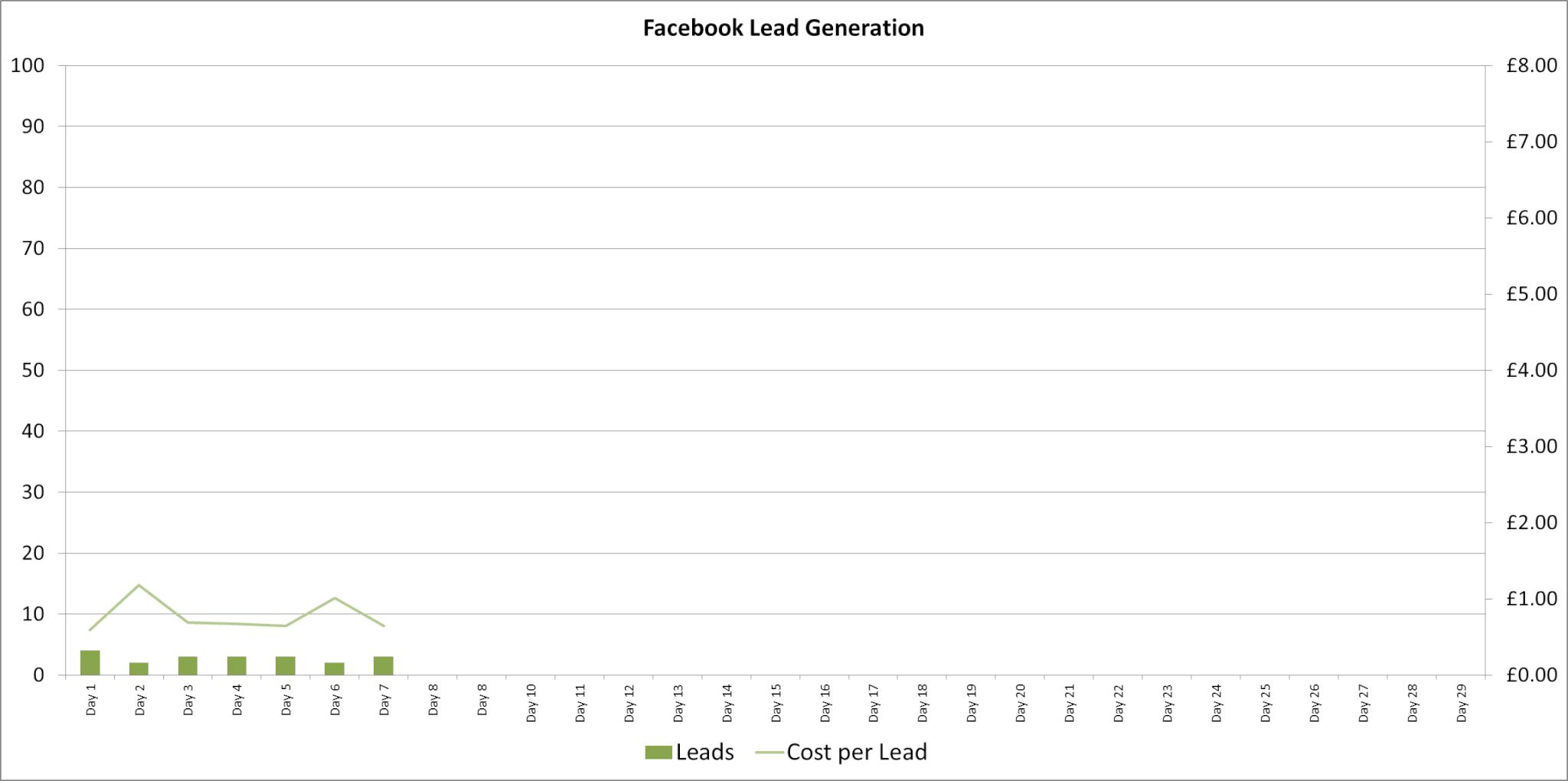
The client initially only wanted 1 location live, so we added a 10km radius around the location.
It was good start for CPL as an average of 3 leads a day were recorded at £0.73 CPL.
Week 2
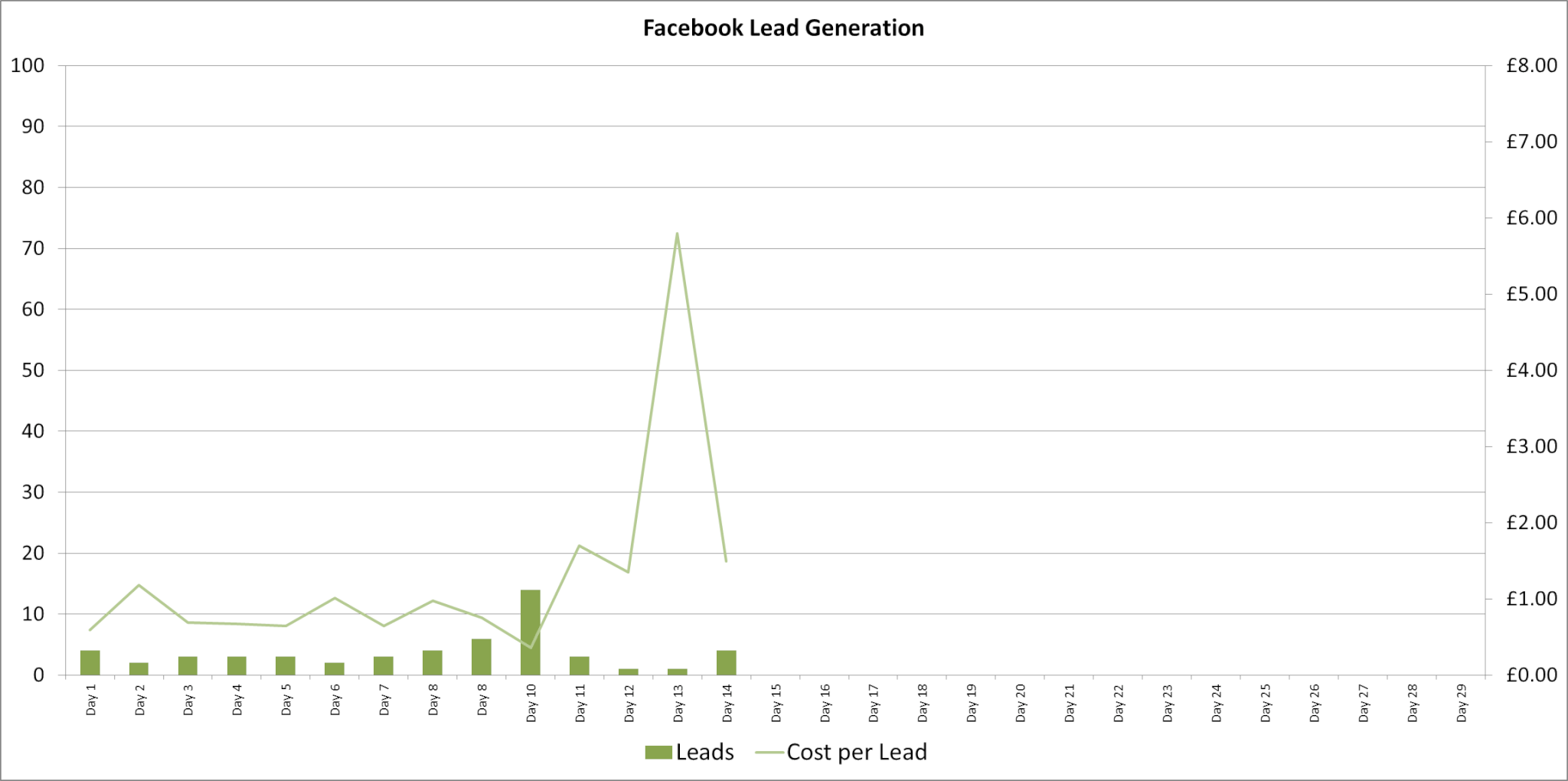
Given our time limitations we wanted to increase lead volume, so widened our location radius which saw a daily improvement from day 6 to 10.
Although there was a spike in CPL on day 13, our overall CPL was still under £1 for the week.
Week 3
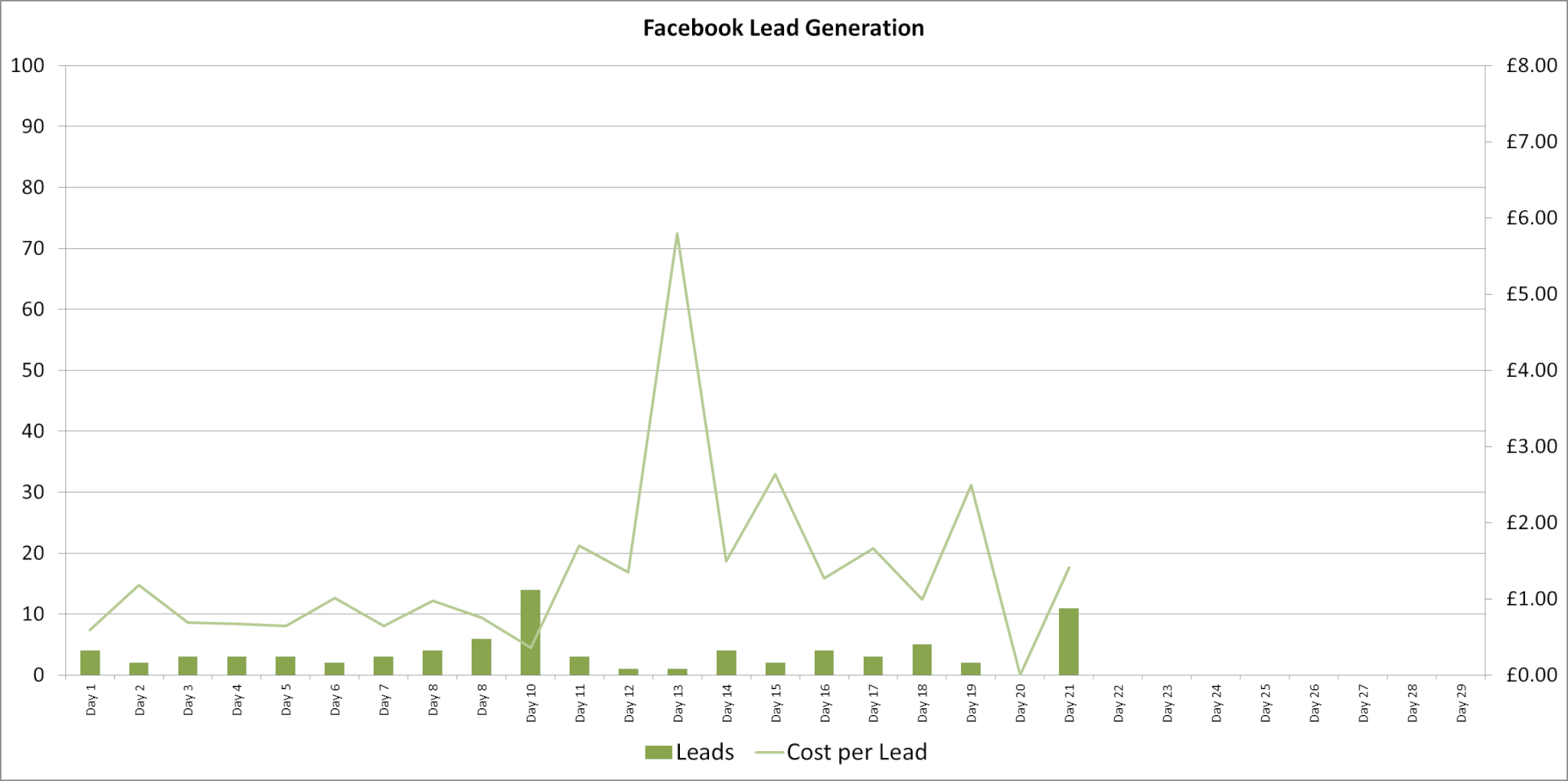
Following this positive performance we created new ad sets for different locations which were set live on day 21.
An instant improvement in lead volume was recorded as a result, with CPL under £2.
Week 4
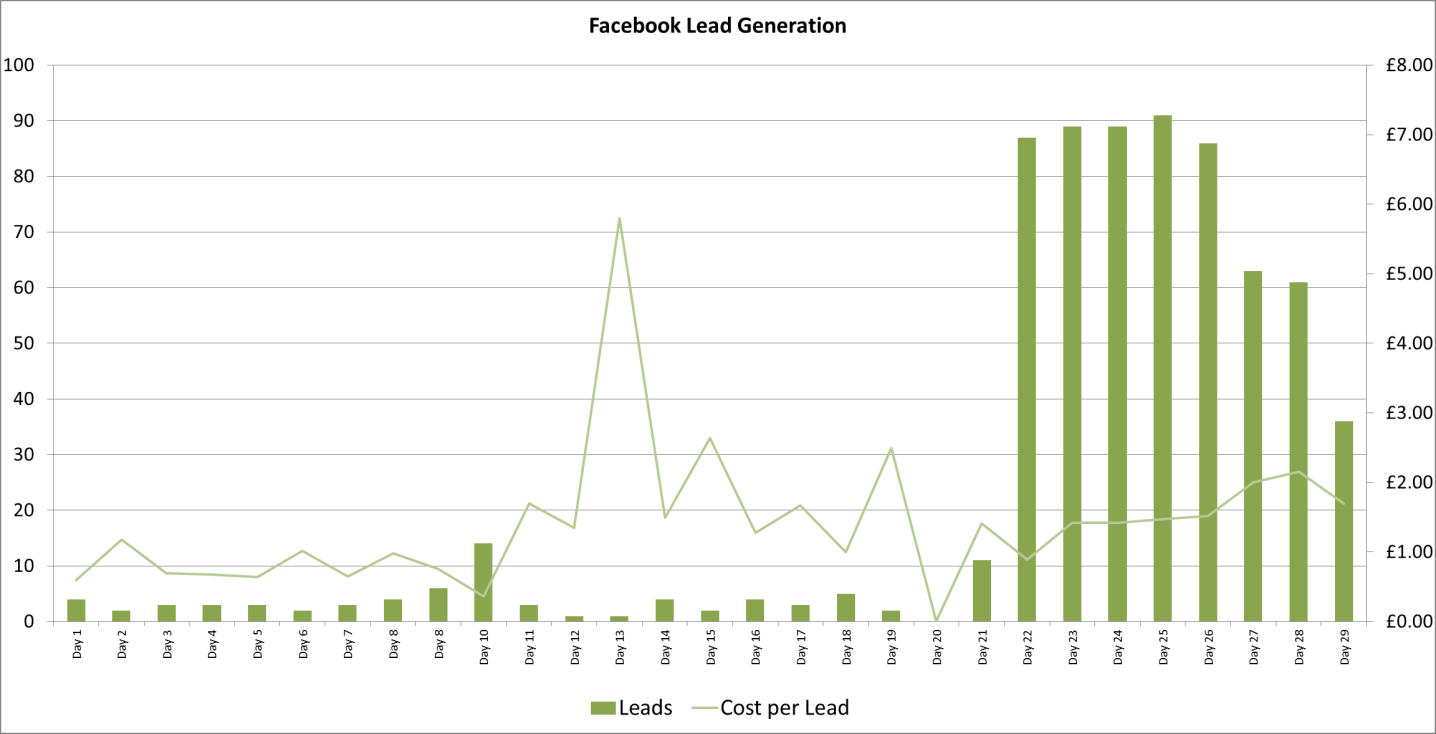
Our client reported that the lead quality was very good, so provided more locations to target.
From day 22 we had multiple ad sets live, targeting 20km around those locations. An instant uplift in lead volume occurred, averaging 75 leads a day.
Conclusion
| Spend | Leads | CPL | |
| Total | £1,001.49 | 682 | £1.47 |
For the month period that we were live, we recorded 682 leads at £1.47 CPL.
The targeting options available to us meant that we were able to succeed in providing good quality leads that met the client’s criteria, at a CPL that was 71% under the target. Following this success we’ve relaunched the campaign as this has proved to be an efficient and inexpensive way of gaining leads.
When looking at ways to gain leads, the Facebook Ads platform should be a definite consideration. With over 1 billion active Facebook users every day, there’s no question that this platform provides a wide and diverse reach to suit the majority of lead generation businesses.
If you’re interested in setting up a Facebook Ads account, or simply want to discuss your current strategy, feel free to contact us for a no obligation conversation.
Written by Anna Wood, PPC Analyst at Circus PPC Agency
Circus at Buy Yorkshire 2018 – Stand Number B178
1 day. 200 exhibitions. 4,000 delegates. On 15th of May the largest B2B conference and exhibition in the north is back. Buy Yorkshire returns to First Direct Arena this year, and with 20 different speakers there’s something for everyone.
Not only are there a number of talks to book on to, but the Arena itself will be a sea of activity, where you can network and share experiences whilst building new relationships within the business community.
This year we’re proud to announce we’ll be hosting a stand as a premium exhibitor, where we’ll be around for a casual chat or to discuss how we could help develop your PPC strategy.
Pre-booked appointments are advised, so you can guarantee some time with us at any point in the day. We’ve set up a Calendly booking schedule so it’s easy to choose a time that best suits you – hurry, it’s first come first served!
This year we’re also starting PPC workshops with our MD Rick Tobin, where you’ll be given an insight into the basics of PPC. It’s an opportunity for you to get an understanding of PPC and how it could benefit you and your business. Come and have a chat with one of our experts at Buy Yorkshire for more information.
We will also have a prize draw, and the details will be announced within the next few weeks.
With seminars running throughout the day and 200 exhibitions, there’s a whole scope of opportunity. Whether you’re booked in to see a particular seminar or just coming along to check it all out, pop over to our stand for some where we can have a chat over a beverage. We hope to see many of you on the day and if you’ve already got an AdWords account we can provide a free account audit, otherwise our team are always happy to have a chat.
Useful Links
https://buyyorkshire.com/sponsor/circus-ppc/
Written by Anna Wood, PPC Analyst at Circus PPC Agency
Google’s Product Kick-off Event – 17th January 2018
Last week we attended the Google H1 Product Kick-off event, where Google’s Product Experts gave us an exclusive look at all upcoming products and betas for 2018.
Due to Google trialling many of their new updates as betas or not releasing until a later date, we are unable to provide full details of what’s to come just yet, but in the meantime here are some of the most recent key releases you need to know about:
The New AdWords User Experience:
If you’ve been using AdWords at all over the last few months, you’ll already be aware of the new interface Google have launched, however you may not know about some of the new features available:
- An ‘Overview’ page which includes a summary of your performance and important insights
- Promotion extensions – previous AdWords ran as beta only
- ‘Household Income’ targeting, under the Demographics tab
- ‘Opportunities’ tab at MCC level, rather than just single account level
Although certain accounts have been able to access the new interface over the last year, Google are still making changes and releasing updates aiming to further improve the experience.
AD FORMATS
AdWords search: Dynamic Search Ads Ad Groups in New AdWords Experience:
- DSA has moved from campaign to ad group-type.
- 2 types of ad groups are now available- Standard and Dynamic
- DSA included in existing budget, and is easily comparable with keyword performance in the same campaign
VIDEO
Desktop Video Masthead 3.0
- Up to 50% bigger than previously
- 4 new native templates and more visible CTA
- No more upcharges for 360, livestream, up to 5 creatives
YouTube: Location Extensions & Store Visits
- Location extensions direct users to a physical store location
- Store Visits allows you to measure foot traffic and see how offline actions are affected by online performance
- Link My Business to AdWords and turn on Location Extensions to use on TrueView ads
YouTube: Active View+
- 14 new metrics including:
- How long an ad was visible and audible
- If the ad was on within a background tab
- Whether or not the ad was full-screened
AUDIENCES
Custom Affinity 2.0:
- Create your own bespoke affinity audiences
- Custom audience data inputs;
- Google Search, Maps location history and Android apps
Custom Intent:
- Reach users with intent to buy
- Provide relevant URLs and KWs that represent your audience, users with intent to purchase are then targeted from signals such as web browsing behaviour and search query usage.
- Now available on GDN
AdWords: Customer Match – Address & Phone Number:
- Customer Match lists can be created by uploading addresses and phone numbers into AdWords
- This data is matched with Google’s user information, then lists are created
- Lists can be targeted on Google Search, Shopping, YouTube & Gmail
MEASUREMENT & ATTRIBUTION
AdWords Attribution:
- Cross-channel, cross-device enabled
- Uses data based on data-driven attribution model
- Supports Search and Shopping
SHOPPING
Merchant Centre: Multi-Client Account-level Reporting
- A new home page consisting of a diagnostics-like view of items metrics, as well as a downloadable chart with sub-accounts and their disapproval change week on week.
Showcase Ads:
- Enables you to create groups of related products and present them together as an introduction to your brand
- Appears for upper-funnel queries, reaching the user when they’re in the process of buying
- Create tagless remarketing lists
DOUBLECLICK
DC Updates:
- Enhanced bidding algorithms for CPC and CPA bidding models
- Introduction of Adaptive RLSA: automatically create audience targets based on conversion performance
- Attribution: enables you to build up to 5 custom data-driven attribution models, with conversions tracked via Floodlight tags
GOOGLE ASSISTANT
Actions on Google:
- This developer platform enables you to build conversational apps for the Google Assistant
- Benefit from first-mover advantage on a new uncrowded platform
- Currently available in 4 EMEA languages, but will be expanding
It was great to hear about some of the exciting updates Google have planned for this year. With changes applying to categories such as Bidding, Audiences, Shopping, Video & Attribution to name a few, we’re looking forward to seeing how this may positively impact our accounts. If you’d like to benefit from some of these great Google products, we’d love to hear from you!
Keep an eye out for further updates from us about Google products as they are released over the next few months.
Written by Anna Wood, PPC Analyst at Circus PPC Agency