


Circus’ Commercial Director, Ahmed Chopdat, recently attended Google Marketing Live in Zurich, where leaders and experts from Google, as well as PPC agency experts from around the world, gathered to share information and knowledge about the upcoming changes to Google and the industry landscape as a whole.
Now, Ahmed is here to share what he learnt, and the takeaways that PPC agency experts should be focusing on across their day-to-day activity.
Prior to the Google Marketing Live conference in Zurich, we were provided training and insights across both privacy and Performance Max, exclusively by our fantastic Google Account Manager. In addition to the information and learnings from this training, it was apparent at GML2022, that both of these things should be a focus point moving forward.
Privacy
It’s no secret that privacy is becoming more and more important when it comes to individual preferences and data management. Privacy rules are set to change very soon, with Google having already switched to the use of first-party data only, as well as many platforms already not tracking users.
In order to best help bridge this gap, enhanced conversions are essential, and will also enable Smart Campaigns to work efficiently and successfully. Enhanced tracking, on the other hand, only currently works with Google Ads – with plans for GA4 to be rolled out soon, but currently without a confirmed date.
So, what can be done to begin fighting against changes to privacy rules, and working with them to best enhance our clients’ campaigns and performance?
Ensure that accounts with Google Ads tracking allow Enhanced Conversions;
Move tracking from Analytics, to Google Ads, and allow Enhanced Conversions to begin tracking real data to show the value of what we’re doing;
Move over to GA4 when it’s available for our accounts;
Implement the above in order to best set ourselves and our clients up for success when it comes to Performance Max.
Performance Max
Now that Google have announced auto-upgrades across accounts, it’s important for advertisers to prepare their account for this changeover, and preferably, make the switch themselves. Testing will be paramount, and doing so before the auto-upgrade deadline in August/September will help us to better understand this new type of campaign and how it can work for clients.
One reported positive of Performance Max so far is ‘zombie’ or ‘zero impression’ campaigns, which work by taking products that aren’t getting any impressions, and utilising this campaign to open them up in order to give the account a history of product impressions, sales, and allowing them to work within original campaigns again. This can then be repeated for other products that aren’t seeing impressions.
Another tactic to best make use of Performance Max campaigns is the grouping of products into smaller groups in order to add more tailored assets. For example, rather than having three products in one campaign, breaking them out into three campaigns allows to tailor imagery, pricing, materials, brand and more – something that could be particularly valuable for accounts with large product inventories.
What else?
Despite the focus of the conference being on privacy and Performance Max, there were a number of other key highlights that are important to note and keep in mind when approaching future campaigns and client accounts.
Automation
Understanding the power and influence that automation has when it comes to driving results is essential, and soon, advertisers will have access to experimental tools to A/B test and measure the incremental impact of Performance Max campaigns.
Video
Video Action Campaigns and App Campaigns are set to automatically scale to YouTube Shorts, reaching people through short-form content.
Privacy-Centric Measurement
Soon, advertisers will be able to run Search and Conversion Lift tests directly in Google Ads and Display and Video 360.
Digital Business Transformation
It’s time to adopt a ‘test and learn’ mindset focusing on incrementality, ensuring that you have the right skill sets both internally and with external partners to support these efforts.
Uncertainty
Renowned author and entrepreneur, Margaret Heffernan, urged businesses to prioritise agility in the face of challenges and unpredictability.
Final Takeaways
Since the Google Marketing Live event, Google have once again postponed the deadline for ‘third-party cookie deprecation’ (The Drum), now planning to phased out cookies in the second half of 2024. This means that despite the inevitability of a cookieless future for advertisers and brands alike, there’s a little more time for those concerned to set themselves up in the best way possible to effectively combat such a drastic change to the way things currently operate.
When it comes to Performance Max, only time will tell of the potential improvements it will have on account performance, and the most important thing to remember, as always… test, test, test!
Other Resources
Ad Copy Testing – https://www.thinkwithgoogle.com/intl/en-gb/consumer-insights/consumer-journey/navigating-purchase-behavior-and-decision-making/
GML2022 – https://adsonair.withgoogle.com/events/google-marketing-live-2022
Increasing CPCs – why are they so high right now?
And how can I stop increasing CPCs from hurting my ROI?
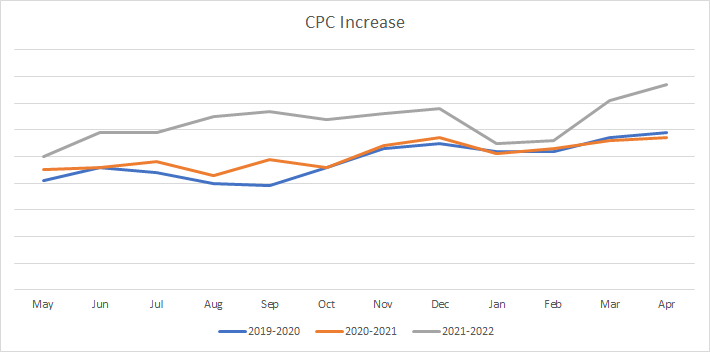
For advertisers, it’s no secret that the current and continuous increases in CPCs is worrying and rapidly changing the success of PPC campaigns for businesses.
The good news is that, right now, this is a problem being faced by the industry as a whole.
The bad news – there’s no sign of it improving anytime soon.
So, why is it that CPCs are so high right now? And is there any way to combat these changes to maintain ROI?
Commercial Director, Ahmed Chopdat, addresses the challenges faced by both businesses and PPC experts alike, and what they can do to ensure that said challenges are managed effectively and in a way that doesn’t permanently damage account performance.
“This time last year, we were in the midst of a pandemic, so there’s no way for advertisers and PPC experts to fairly and accurately compare account performance. Businesses did what they could to survive and remain profitable, and consumers had a completely different mindset when it came to spending.”
Increased Competition
The amount of ecommerce websites is constantly increasing, and following a period where purchasing goods online was the only way to do so throughout the COVID-19 pandemic, it seemed like the sensible avenues for many businesses to explore.
Now, it appears that the soaring success experienced by businesses has begun its descent back to earth, with markets having become saturated and extremely competitive as demand has returned to the level it was at before the pandemic, or arguably reduced even further.
It’s important that PPC experts and businesses alike don’t only remain up-to-date with changes in PPC and advertising, but relevant industries and the changes and trends that might be affecting them. Competition is fierce, and the more you know, the more you’re able to influence the outcomes of your campaigns.
“One of the biggest challenges being faced by PPC experts at the moment is the frequent changes being made to best practices across channels that we utilise on a daily basis. It can completely interrupt the way we operate as both individuals and businesses, and time and resource is required to remain up-to-date and educated around these best practices.”
Everchanging Best Practices
Consistent changes and updates to the way we work has become a minefield for PPC experts to navigate as they’re faced with the additional challenge of keeping up with the latest trends and best practices. Alongside increasing CPCs, these changes add another layer to the challenge that is helping businesses to remain profitable and stay on track with their business goals and objectives.
Unfortunately, this is just a part of the consistently advancing digital world we live in.
PPC experts, now more than ever, need to be at the top of their game when it comes to the changes and updates in best practices, trends, and industry news. In turn, this will hopefully put you one step ahead of competitors when it does come down to bid strategy, campaign success and maintaining ROI.
“What’s easy to forget is the huge increases to the cost of living, energy and fuel prices, which has consequently, had a significant impact on the way that people are spending. Most people don’t have the same amounts of disposable income to spend on wants opposed to needs – making it harder for businesses to push online sales.”
Cost of Living and Drops in Demand
Due to the inflation rate currently forecasted to peak towards 9% this year, many are finding they have significantly less disposable income to spend on wants, rather than needs.
In March 2022, ‘83% of adults in the UK reported an increase in their cost of living,’ with rising costs of consumer goods, energy, and fuel affecting households financially and as a result, leaving them with much less to spend. In addition to this, further increases are expected, meaning that this will only become more of a problem.
Advertisers and businesses facing difficulty as a result of these increases might believe that pushing aggression in areas where CPCs are high is the best way to address these issues. In reality, looking at alternative avenues of revenue could be a better option, as whilst PPC is huge channel, it might not be the best performer at the moment. Focusing on and improving other channels could help with any losses in revenue or reduced ROI during a fragile period for PPC marketing.
All in all, the current state of PPC for businesses and advertisers alike looks to be frustrating, and the bleak reality is that it’s likely to get worse before it gets better.
For those working with PPC agencies or experts, make sure that you’re on the same page and remain agile and adaptable in order to meet requirements and deliver a strategy that helps your business to remain profitable.
For PPC experts, it’s important to remain up-to-date and aware of the constant changes to best practices, and to understand and accept the external factors associated with increasing CPCs and a potential fluctuation in campaign success, so that you can best explain this to clients and avoid frustration at changing account performance. There’s also a lot more changes coming from all of the search engines – especially for tracking – over the next few months, which will most definitely have an impact on the way PPC experts work going forward.
Stay Ahead In SEM With Adthena Search Intelligence
For retailers, search is an essential part of the marketing mix—a key driver of awareness, conversions, and customer acquisition. It’s also a big investment. The challenge is that marketers are too often making PPC decisions in the dark because they can’t easily see what competitors are doing or how consumers are responding.
 What terms are competitors bidding on or overlooking? Who has a better offer or price than yours? Who’s poaching your branded terms? What competitors or threats are inflating CPCs? What does your audience want right now? Google can’t provide you with that data, and capturing it manually is unrealistic, which can leave big blind spots in your PPC strategy.
That’s why Circus works closely with Adthena to help our clients craft the most competitive and cost-efficient search campaigns possible. Adthena is an automated search intelligence platform that uses AI to capture competitive data that retailers can use to optimize search ROI and capture market share. It provides deep insights that Google can’t, and as cookies disappear from the marketing landscape, it provides a way to keep your relationships with consumers personalized and targeted without compromising privacy and trust.
Adthena monitors search opportunities and threats across your landscape
Often the first step we take on Adthena with our clients is benchmarking. The platform can quickly give you a full picture of your entire search market, including who your key competitors are and where you stand when it comes to share of search, which is often an accurate proxy for market share. Even with these very basic questions, the answers Adthena reveals are often surprising.

From there, we use Adthena to help surface all kinds of competitive data to inform our clients’ tactical decision-making. Here’s a sample.
- By analyzing keywords clients are capturing vs. their competitors, we can quickly spot trends and identify new terms to include in ad copy to increase traffic and click share.
- Using Adthena’s Smart Monitor tool, we can set up automatic notifications of key movements in the landscape that might signal a risk or opportunity for a client. Maybe a competitor has dropped out of the market and left a gap. Or perhaps a key rival is diving in early with holiday messaging and aggressive bidding ahead of the pack. Getting automatically alerted to these kinds of shifts keeps you from being left behind.
- Adthena’s brand protection toolset lets us see who is bidding on a client’s brand terms – whether it’s a competitor brand or an affiliate or reseller. With that information, retailers can take action to protect their brand equity and ensure they are not paying excess commissions.
- For retailers thinking of entering a new category or launching a new product in Google or PLA, Adthena insights are vital. You can essentially scope out the entire search landscape in that category before you invest a penny, ensuring you come in with maximum impact and Return on Ad Spend (ROAS).
A new tool for location-based search
Covid-19 accelerated the trend toward localized search and caused a major shift in consumer behavior, with more people searching by location than ever before. But marketing by location requires a huge amount of consumer insight, and Google data is becoming more scarce due to privacy issues.
Adthena’s new Local View solution uses AI to provide the intel marketers need to compete efficiently on a local level. In any city, state, Nielsen DMA, or custom region, it enables marketers to understand consumers and their search habits, the competitive landscape, and location-specific threats and opportunities.
Let’s optimize your SEM strategy
The possibilities to glean search insights from Adthena are virtually unlimited, and your Circus Account Manager can help you explore all your options.
Before you plan your 2021 seasonal retail strategy, kick off a product launch, or enter a new local market—or if you simply want to fully optimize your next campaign — give us a shout, and we’ll give you a tour. You can request a demo here or contact us by email at thomas.scottstewart@adthena.com.
Guest post By Tom Scott-Stewart, Agency Partnership Manager
Circus PPC & Adthena
“Partnering with Circus PPC makes sense for both the Agency and their Clients. Once a client comes onboard with Adthena they are assigned a Customer Success Manager and an Account Manager who work as an extension to the client’s PPC team. The end result is a dedicated team combining data and insight to increase revenue and improve ROAS.”
Tom Scott-Stewart, Agency Partnership Manager, Adthena
“After researching many different software platforms in this arena, Adthena stood out for us and with the support they have provided, we feel this will be a solid relationship moving forward. With Adthena’s insights, we can help take our clients’ accounts to the next level.”
Ahmed Chopdat, Commercial Director, Circus PPC
iOS 14.5 – When in doubt, zoom out
In April 2021, Apple upset the apple cart (hilariously intentional pun) with their iOS 14.5 update, which gave users more active participation in the way their data is collected. Anyone with the new OS can now opt out of apps tracking their activity across different platforms, with later versions reminding the user of their rights with every update.
Where is the line between a company’s right to use information and the user’s right to privacy? Knowing how consumers use different online platforms is essential for marketers and brands, but users want the anonymity the internet provides.
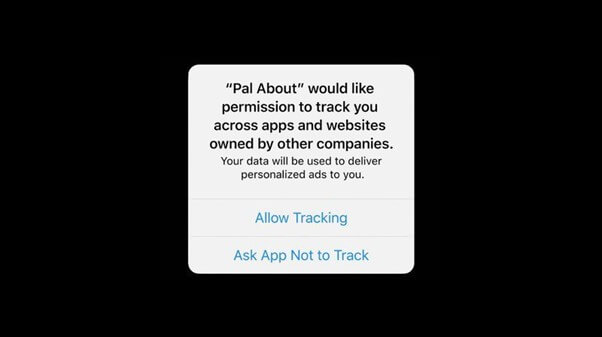
From an uptake point of view, this decision by Apple has been a popular one. As of May 2021, around 85% of users have chosen to opt-out already. Can you hear that? It’s the worlds tiniest violin playing for every social media marketer in the world.
Will this be the end of the golden era of digital advertising? There is no doubt that working with these new changes will be a massive challenge for growth marketers, but we have pivoted once, and we can pivot again!
Since the release of iOS 14.5, agencies and their clients need to shift their focus away from each individual puzzle piece of data, to the whole picture each piece creates. When in doubt, zoom out.
For example, Facebook has seen a rise in performance fluctuations of campaigns that functioned well before the updates, but this doesn’t necessarily mean these campaigns are no longer effective. The way Facebook gathers and reports data has changed. This creates a greater reliance on multi-platform analysis to understand the campaign’s true performance.
In a webinar hosted by Facebook on the implications of these changes, it suggested that Apple’s changes are likely to affect advertising accounts on Facebook by only 5%, a much more reassuring figure than the 60% that was initially thought. Data around app install campaigns will naturally be affected more, and are seeing a drop in account performance of 10-30%.
If a user does opt out of app tracking transparency, Facebook does still have the ability to track the purchase conversion through Facebook reporting, so marketers are still able to test the viability of ad sets through Facebook and use that data to make critical decisions with their clients through the Aggregated Event Measurement to measure campaign performance, in a way that is consistent with consumers decisions about their data. FB use Aggregated Event Measurement to process Pixel conversion events on iOS devices. Facebook Pixel conversion events can track the actions people are taking on your website.
Marketers need to watch out for the delay in Facebook’s data reporting because of this. Before the recent update, you would be able to check in on an ad’s performance in real-time. Now, it will take up to 5 days before the complete conversion data will appear in Facebook analytics. This delay is forcing marketers to consider the implications of over longer time horizon, rather than day by day (which actually is the better practise anyway).
This change in the data reporting period is due in part to a shift in how Facebook will now attribute sales.
Another shift we’ve seen is the removal of view-through conversions events. Meaning, if a potential customer sees a product in your ad and purchases it without clicking on the ad first, (i.e. they visit your website directly to purchase instead), Facebook will no longer attribute this sale to the ad.
Before iOS 14.5, Facebook would have attributed the purchase to the ad, as it would have considered it as part of what influenced the customer to make the purchase. Now, Facebook cannot track the user’s activity across other platforms, so they cannot report that the user went on to buy the product. Facebook can only report conversions from a user clicking on an ad and making a purchase within 7 days. But, perhaps an unpopular opinion amongst marketers, is that view through conversions have always been a little ‘slimy’. The role of the marketer is to create meaningful engagements with customers. So, make them, just don’t use impressions.
Are you starting to feel the sting of iOS 14.5? Take a deep breath and read on. All hope is not lost!
We aren’t losing a vast amount of data; we just need to be shrewder about how we collect and analyse it.
All data from click-through conversions made on Facebook will still be accurate after the 7-day reporting period, and Facebook will still report which of your ads have been seen in what traffic volumes. We can cross-reference this information with Shopify (other web stores are available) and Google Analytics data to infer what percentage of conversions made through these methods are likely to be contributed to seeing the original ad on Facebook.
We’ve spent some real quality time in the multi-channel funnel area of Google Analytics recently. This tool allows you to fully scope the marketing mix channel by channel, with the assistance of some handy Venn diagrams. Take a look!
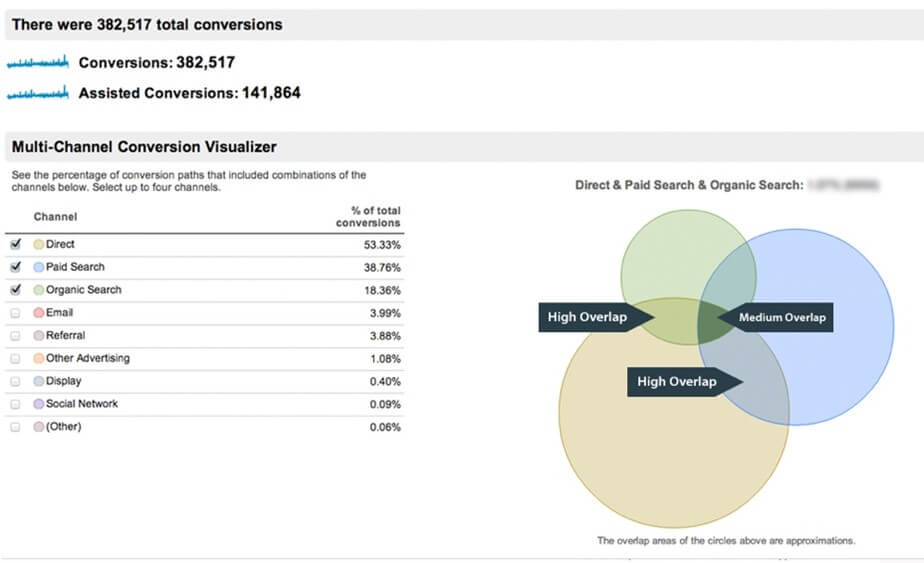
And at the end of the day, if your sales are up, your advertising is working.
Facebook cannot track a user’s journey across platforms, but growth marketers still can. We have the data. Globally, it’s a smaller problem…
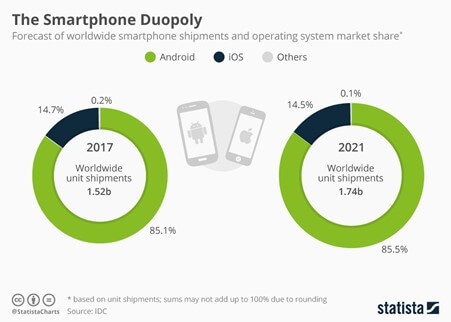
As you can see, Android and iOS make up over 98% of the global market share, but Android takes up a whopping 85%, whereas iOS is about 14%.
Like we said before…
When in doubt, zoom out.
Written by
Karl Sandor, Chief Marketing Officer
Google ads is down – What do I do?
It has happened a few times recently where Google ads has been down as well as other advertising platforms. If it is down, what can you do in that time which would be a productive use of your time?
We saw plenty of posts the last time it was down where some people were sat twiddling their thumbs waiting for it to be back up. There really is no end on how much time you could spend on most PPC accounts to continually improve the performance.
What some people think the journey for a PPC account setup looks like:

What the journey actually looks like:
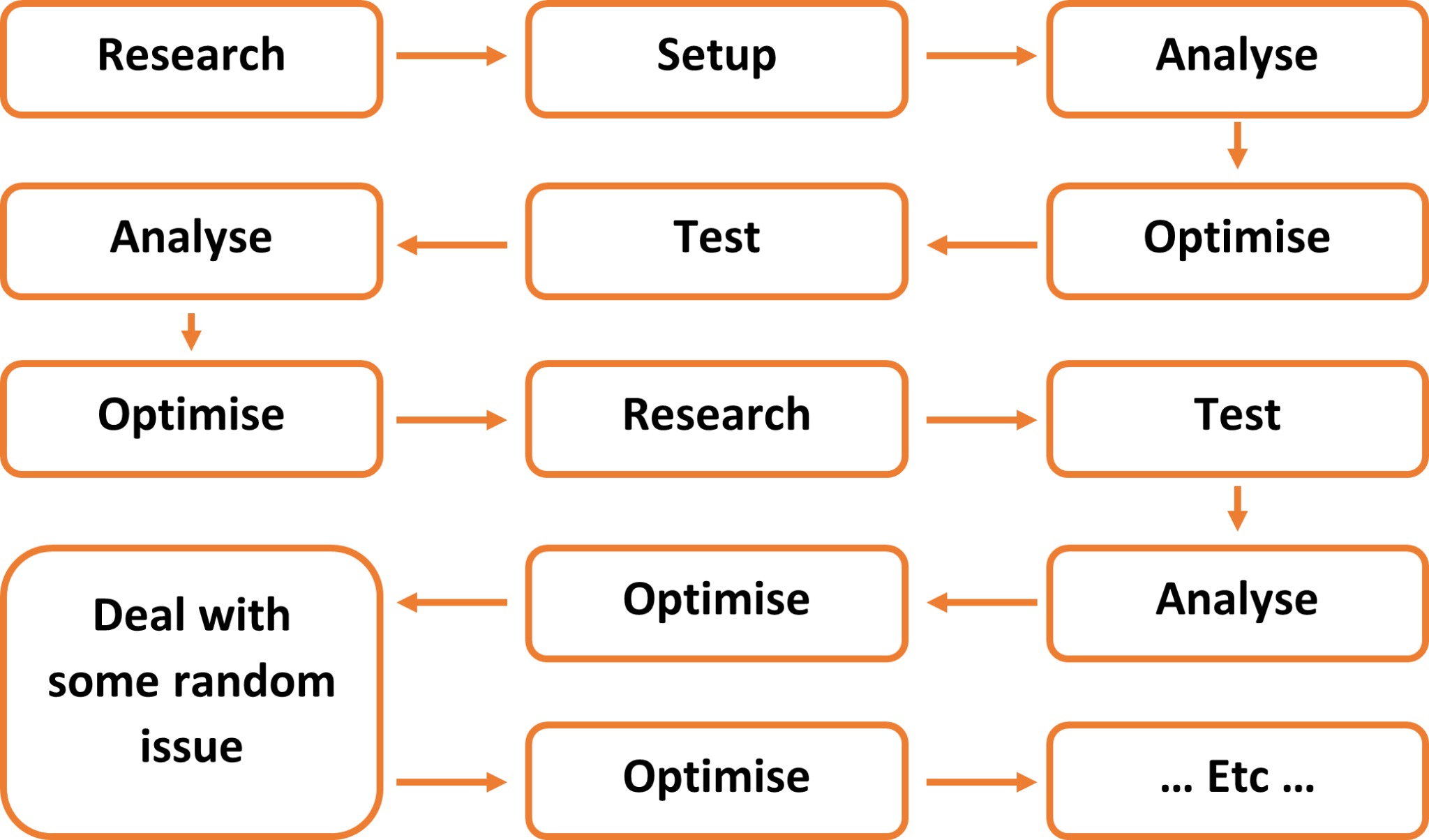
Getting back to the main topic of what you can do outside of the actions you would do on the engines. This is by no means an extensive list …
- Analyse the data you already have. Assuming you have been downloading data daily for your accounts and you have a wealth of data which you can analyse already. You may also have data in other systems you may have that you can analyse.
- Take a step back and understand if your strategies are helping you achieve your long-term goals. Take this time to reflect on what you are currently doing.
- Start planning new campaigns.
- Are you live on other engines already? Work on them.
- Are you not-live on any other engines? Perfect time to research them.
- Discover new keywords – find new keywords using the tools outside of Google ads.
- Update your product feed – are you using a tool to help you with updating and testing your product feed? This should be quite an easy thing to test with a tool.
- Competitor research
- Check your location data – this may be on a backend system or on Analytics.
- Check your ad scheduling data.
- Landing page analysis – you may need some data already for this or pull data from analytics however this is always worth looking at.
- Update your reports – do your reports give you the data you need in a concise manner and in an actionable format. If not, this is definitely something you should look at.
I have only provided 12 actions above. The list of things you can do on PPC however is never ending. You never run out of things you can do on PPC.
As you read the list you probably thought, I do not need to wait for an engine to be down for me to analyse a lot of this and should be doing it anyway. In which case you are absolutely correct. You should be doing these things anyway and at Circus we pride ourselves in not being very narrow minded with our approach to PPC.
How to turn your website traffic into customers
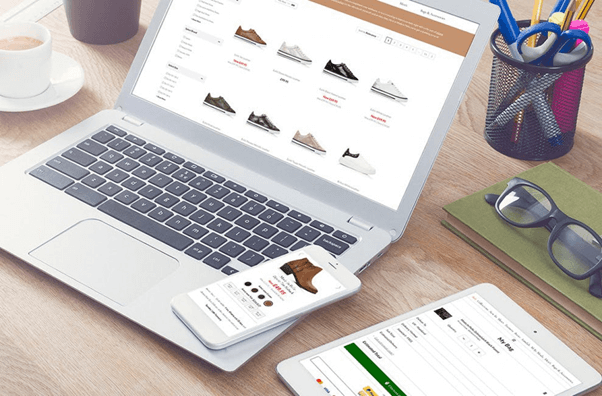
After putting time, money and effort into your marketing strategy you don’t want to lose out by having visitors leave your site at the last minute without converting.
That’s where conversion rate optimisation tools come in.
Offering a variety of ways to personalise the customer journey, benefit product discovery and increase not only sales but average order value, CRO can take your PPC and paid social efforts to the next stage, helping you on the journey to achieve long-term growth.
What is eCommerce conversion rate optimisation?
Simply put, eCommerce conversion rate optimisation focuses on increasing the percentage of your website traffic that makes a purchase.
With the average eCommerce conversion rate currently standing between 1 and 3%, tracking your conversion rate helps you to understand where customers are making desired actions on your website.
No matter how good your PPC campaigns are, spending time, effort and budget directing traffic to your website doesn’t mean they will complete the purchase. You don’t want them to fall off in the last step.
CRO is the final step in your marketing toolkit to enhance your website’s growth so make sure you’re making the most of it.
What causes low conversion rates?
We’ve all been there. You’re driving traffic to your website, visitor numbers are up, but your sales aren’t increasing.
This could be due to a variety of factors and is what makes optimising your site for conversions so crucial.
The layout of your website forms the users’ impressions of your brand in a matter of milliseconds. If your website has poor site navigation, slow search and doesn’t guide the users through the relevant pages you will quickly lose visitors.
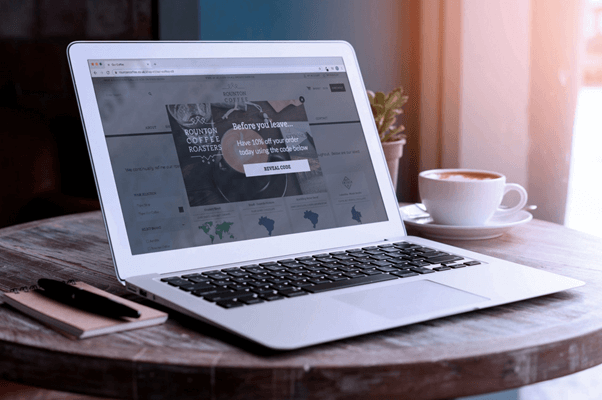
You may not be capitalising on opportunities to re-engage customers who are showing signs of leaving, also known as exit intent.
Personalising the customer journey with Behavioural Overlays can not only encourage customers to remain on-site but also offers the opportunity to increase average order value and potentially save a vast amount of conversions that you may otherwise have lost.
If shoppers do make it as far as the checkout page, however, your work is still not over. A lengthy checkout process with multiple forms and complex layouts could mean shoppers discard their basket just before purchasing.
How to improve your conversion rate with Salesfire
Once you’ve identified the areas for improvement you can focus on personalising the customer journey and increasing the conversions for your website.
Product discovery
To encourage shoppers to stay on your site, you need to make it as easy as possible for them to find what they’re looking for.
That’s where product discovery comes in.
Getting the right product in front of the right customer as quickly as possible is made easier with AI-powered search functionality.
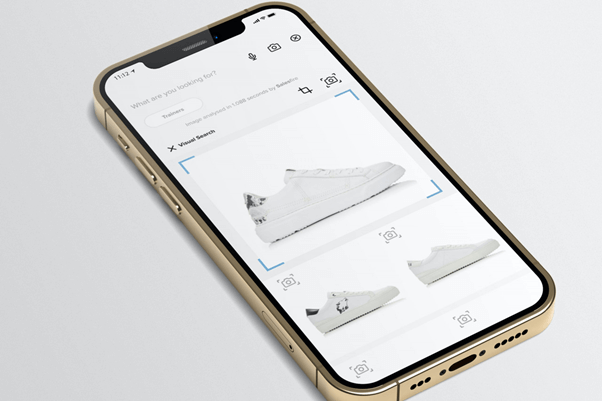
Leading the way in eCommerce technology, Visually Similar Search helps connect shoppers to their ideal products quickly and accurately.
Driving 6.4% of eCommerce revenue, Visually Similar Search shows alternate options if a product is out of stock as well as showing all available similar products to deliver the right item at the right time.
Customers can upload their own inspiration or crop down to specific shapes, colours or patterns to quickly unite them to their ideal product.
Optimising your search bar is also a quick win for your conversions.
Customers expect an instantaneous experience when it comes to online shopping, so the speed and accuracy of your search bar matters.
It keeps users on your site and connects them quickly to their purchases, increasing the conversions through your eCommerce store.
With a 16% uplift in conversions, Site Search works hard to attract attention and direct customers through the customer journey. Search promotions can also be implemented to lead customers to popular categories, promote sales and encourage newsletter sign-ups.
Capture abandoning users
Once you get customers to your site, make sure you’re doing everything you can to prevent them from leaving.
One way to do this is by creating urgency with a Prompt to incite further action from your visitors and encourage them to add an item to their basket.
Instil a sense of urgency by alerting the customer to the number of purchases on product pages and showing limited time offers such as free delivery to encourage shoppers to quickly add to their basket before time runs out.
If your shoppers are abandoning their baskets at the very last minute, however, then Behavioural Overlays can complement your eCommerce strategy with an average 115:1 return on investment.
Using mouse movements to detect exit intent, Salesfire’s Behavioural Overlays work to capture and re-engage shoppers before they leave your site for good.
With 90% of customers saying that free delivery is their main incentive for shopping online, Dynamic Basket Overlays can trigger reminders based on the current value of your shopper’s baskets to encourage them to add items to their cart and reach the free delivery limit, helping to increase average order values.
Offering a variety of incentives from discounts to encouraging newsletter sign-ups, Overlays can regain shoppers’ attention and encourage checkout completion.
Personalise every step of the user journey
Customers expect eCommerce personalisation as standard.
Every customer wants to enter a shop and be presented with their favourite items, finding everything they need in a matter of minutes.
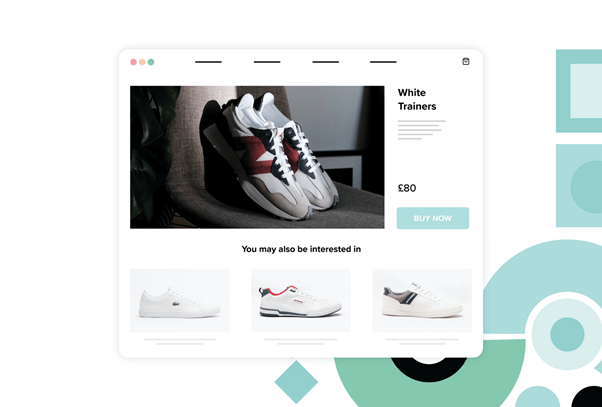
By offering personalised product recommendations throughout the customer journey you can inspire further purchases and promote cross selling opportunities, working to increase your average order value whilst keeping your customers engaged with relevant products.
This is achieved by dynamically showing content, media or product recommendations, based on browsing behaviour, purchase history data, demographics and psychographics.
Recommendations can also be added to checkout pages to encourage impulse purchases and help build bigger baskets.
Personalising the customer journey minimises the steps between a shopper and their conversion whilst also providing the opportunity for cross-selling and upselling products.
With a selection of agile and adaptable conversion rate techniques your website can work harder to turn the traffic it receives into paying customers.
If you’re interested in learning more about these Conversion Rate tools you can book a free demo now or contact us by emailing us at enquiries@salesfire.co.uk or call on 0204 505 9040.
Guest Post by Kelly Aitkin from the Salesfire marketing team.

PPC Protect Guest Post – Invalid Traffic
The Dangers Of Invalid Traffic
Anyone who buys paid traffic on Google Ads is always at the risk of invalid traffic. These fraudulent clicks have plagued the industry for decades and currently show no sign of slowing down.
If you’re running paid ads and think you’re safe, then think again!
Not only does this fraudulent invalid traffic cost advertisers billions of dollars per year, but it also skews marketing data making it tricky to decide on future marketing decisions.
With invalid traffic causing nothing but misery for advertisers, how can advertisers fight back and banish this growing plague? Especially when Google shows little signs of helping.
One solution is third-party click fraud protection software that works with Google’s platform to intercept and block these fraudulent clicks.
Here’s why protecting your ads with this type of software is so important.
Why Is Click Fraud Protection Software Important?
For those that don’t know, anyone who runs paid ads can be subject to a click fraud attack. This could be by a group of disgruntled customers, competitors, or even your own staff!
Recently, one of the largest and most successful football clubs in the world has been under attack from an army of click fraudsters.
Based on a protest over the club’s owners trying to join the European Super League, Manchester United fans have been targeting the club sponsor’s paid search ads. According to estimates, so far they have defrauded advertisers out of over £1 million with their repetitive clicks.
With such a coordinated attack, Google has a hard time distinguishing between real and fraudulent clicks. In this scenario, Google counts all clicks and legitimate and charges advertisers accordingly.
This means advertisers have lost millions from these fans and fraudsters that never had any intention of buying their products.
And it’s not just the club and sponsors that fell victim to the fraud. Many innocent businesses that have no association with Manchester United have also been affected. By bidding on the same keywords as the club’s sponsors, they are also feeling the wrath of the angry fans.
And the sad truth is even without a coordinated click fraud attack, this same scenario happens to thousands of businesses every single day.
Ensuring you have software that can detect the difference between legitimate and fraudulent clicks is key to getting the most out of your paid search budget.
Luckily software like PPC Protect does exactly this and helps optimize paid search campaigns to ensure you only get legitimate traffic.
Why PPC Protect?
PPC Protect is the industry leader in invalid traffic detection and helps thousands of businesses from small agencies to famous brands get the most out of their ad spend.
With its advanced AI learning system, PPC Protect can quickly and easily distinguish between legitimate and fraudulent clicks. Once a fraudulent click is detected, it ensures they can’t click the ad again in the future.
By monitoring thousands of Google Ads campaigns across a range of industries, PPC Protect is always on the lookout for the latest threats.
Featuring a quick and easy installation, PPC Protect is designed to be set up once and left to run. With no settings to constantly change or tweak, it means advertisers can spend more time managing their PPC campaigns.
Circus PPC & PPC Protect
Our partnership with Circus PPC has quickly evolved into a fruitful one for both parties. The team at Circus have been a dream to work with. They have been very proactive in promoting our solution to their clients and the results are starting to shine through already. With our solution improving the quality of traffic to their client’s ads, they can concentrate on doing what they do best. A fantastic combination!
Amar Chana – Partnerships Lead
Since working with PPC Protect, we have saved our clients thousands of pounds already which as expected is reinvested back into their marketing with a stronger ROI.
Ahmed Chopdat, Commercial Director, Circus PPC
One Year On After Lockdown 1.0 and the Impact on PPC
PPC accounts have been impacted a lot over the past year and different types of accounts have been impacted differently. At Circus we have stayed ahead of the competition by constant communication with our clients, understanding how their goal have been changing and ensuring we are delivering what they want. We have also kept clients aware of trends and how the client’s industry is being impacted with the help of Google.
This blog however gives a more overall picture of what has been seen with different announcements made by the government and what we should expect moving forward.

What else had an impact?
- Schools opening and closing.
- The eat out to help out scheme.
- Being at home meant people had more money for iGaming which meant iGaming spends were higher as well.
- The dating industry had a huge impact with not being able to meet.
What does the future hold?
We expect the online retail spending increase is not disappearing anytime soon even post the lockdown. Many people have discovered online shopping who previously had no experience of this and may see the convenience of this and continue to use this.
The online finance market isn’t likely to be back to its glory days anytime soon. However, as conversations of easing and how and when we come of the lockdown are starting, Finance clients are also starting to plan how they can start to build the aggression back up and we expect things to be a lot closer to normal by 2022 rather than 2021.
The Travel restrictions not going away maybe in the summer again and rules in other countries being different as well, international holiday booking travel companies will unfortunately continue to see the negative impact this year. National holiday booking travel companies however will start to see an uplift pretty soon if not already as people have started to book national holidays planning for the post restrictions life.
B2B may see an impact for a while and as many businesses are deciding what the future of the workplace looks like for them, the impact of this will be felt on some B2B businesses. Some B2B businesses who sell products or services essential to run businesses will all start to see an uplift as again businesses are preparing for the post lockdown life.
We have made many broad statements in this blog and these may not apply to you as always your business and your PPC account is unique to you and without looking at that specifically would be hard to make a judgement call on it. If you would like us to take a look then please do get in touch and we will have a look at any potential missed opportunities and help you plan for your future goals.
Circus PPC Agency – UK Leaders
Clutch Names Circus PPC Agency as Industry UK Leaders
In today’s world, it’s important for businesses to establish and maintain an online presence. It not only gives them an opportunity to extend their reach globally, but it also saves them a lot of resources and time in the long term.
One of the best marketing strategies a business can undertake is pay per click marketing. It’s proven to be an effective online tool, but at the same time, it’s the most overlooked. Whether you use it for Google Ads, SMM, or SEO, PPC is a fast and reliable way to market your service/product and drive towards growth goals.
We here at Circus are dedicated to using PPC to innovate the way you conduct your business online. We’ll grow and expand your client base and deliver smart marketing solutions to an award-winning level.
And speaking of awards, we’re excited to announce that Circus PPC has been featured as a top PPC agency in the UK by Clutch! This recognition would not have been possible without the help of our esteemed clients.
“We are thrilled to be chosen as one of the leading PPC Agencies in the UK and ranked as UK leaders by Clutch!” – Ahmed Chopdat, Commercial Director
We look forward to growing more with our clients by establishing a deeper connection with them and extending our reach to new ones. We hope to maintain this fantastic 5-star rating, so here’s to a productive year ahead!

This has been an incredible journey for us. If this award is any indication of things to come, then we are excited for the future!
Looking to build your online presence quickly and effectively? Talk to us now! You can also check out our other works on our Clutch page.
Guest Blog by The Clutch Awards Team
How to decide when to switch your PPC back on?
As the world looks to go back to normal, your business needs to eventually go back to normal as well (if not try and pickup the slack from the last 2 months). Some key money saving and business saving decisions will have been made 2 months ago but now it is time to work out, how you plan to take things back to normal.
How to decide when to switch your PPC back on?
Every company is in a different situation here as detailed a bit more in one of our previous blogs back in early April: https://circusppc.com/how-the-coronavirus-has-been-impacting-ppc-accounts/.
Many companies will fit in to one of the below:

So how do you identify if the interest in your products/service is back?
There are some tools from Google which will help:
- Google trends
- Shopping insights
- Google alerts
- Find my audience
- Rising retail categories
Despite all the facts and figures and all the data that is available, there is only one true way to check if the market is ready for you to turn your PPC back on. Testing it. It does not have to be for a long period and may only be for a day (depending on the amount of traffic you normally receive).
We have found this to be highly effective for ourselves and some of our clients. We have also helped some of our other contacts who have furloughed their PPC team to test this so they can make a business decision based on their own account data as opposed to market averages.
How to pressure test?
Whilst it is always advised to use an expert when managing a PPC account even for a small pressure test, it is not something everyone can afford. So below are some basic instructions on how you could do this. However, Keep in mind it is not one size fits all.
- At this point I am assuming you had your campaigns live previously so they are all setup and ready to go again but just been paused. The 1st step would just be to check your campaigns over and depending on how long you have been paused, you may need to update your PPC ads, sitelinks, etc.
- The most important step here would be to keep an eye on the performance almost hourly:
- Impressions – to track interest
- Clicks and spend – for obvious reasons
- Conversion rate – obviously depending on the normal decision-making time for your account this may be something you cannot keep an eye on hourly.
- Average order value – this may be higher (or even lower) than what you are normally used to seeing.
- And ultimately the ROI, cost or sale, CPA, etc.
- The data will suggest one of the below:
- Things are going great – time to turn things back on properly and maybe even bring your PPC manager back off furlough (which is what the test we did for one of our friends found for them).
- Your market is definitely not back – keep things as they are at either your low tick over level or paused.
- Data is inconclusive:
- You may need to run the test for longer if you are getting some sales but not your usual amount and if you can afford to run the test for a bit longer then do so.
- You cannot afford to keep the test going and if you had to pick a side the data looks negative, so you have to wait for longer before you do test again.
Some Important Things to keep in mind:
- I am not saying spend a lot of money to get your data, but you do have to spend a normal amount to understand the market.
- For some markets, this whole blog is a moot point as the market definitely is not back yet so to do a test would be wasting money for example for travel clients trying to sell holidays for this year.
- You do need some skill in PPC ideally to do this test properly which should not be taken lightly as you can end up wasting a lot of money even when trying to do a small test.
- Always remember the Google ads system data is not live data so the spend may be higher than what you can see as the data does lag a bit.
- Google ads may not be the best platform to do your test. You may find your results are stronger on a different platform compared to Google ads at the moment due to the change in user behaviour.
You may need further help to understand how to move forward so please do get in touch to discuss this further.