


As the world gets smaller and smaller and consumers embrace the advantages of globalisation, most companies came to the conclusion that if they want to be really successful they need to have an international presence.
One of the most effective way of promoting your business in a foreign market is through PPC, however, many companies struggle to achieve a good ROI or even fail miserably as they tend to overlook some aspects that are critical when it comes to international marketing.
Assuming you’ve already identified the countries you want to expand to, you might want to investigate the following aspects in more detail:
- What search engines and devices are most effective in the target country?


Some search engines are more popular than others in certain countries, so before placing all your eggs in one basket you might want to know what search engines people in that market use and how they use them.
Is your target audience using Google, Bing, Baidu or Yandex? What devices to they use and what is their purchasing behaviour? If the mobile device adoption rate is really high, you might want to think twice before sending traffic to an unresponsive website.
- Overcoming the language barrier
It is highly recommended that you create separate campaigns for different languages as that will make your life a lot easier when it comes to optimisation, especially when you want to add new keywords, ads or negatives. We also believe that having a website in the local language is essential for success as it provides more consistency and users won’t have any issues in finding whatever information they are looking for.
Please note that countries like Spain have different dialects so in that case you might want to create a different campaign for each of them.
Also, if you want to target English speaking people, having a separate campaign with English keywords in your account is the way to go.
TIP: Avoid using google Translate and hire a professional translation company
- Cultural Background, Local Values & Attitudes
Even though globalisation took its toll and pretty much all the nations share similar values, local customs, traditions and beliefs still play a really important role in some other places, so you might want to be aware of that.
Before you start localising your marketing materials, have a look at the questions below and see what implications they have for your strategy:
- What’s the dominant religion in your target country?
- Are they more liberal or conservative?
- Do they have any stereotypes or prejudices?
- Are they very ethnocentric?
- What are their main national holidays?
- Consider time-zones
If you’re running campaigns in multiple countries across the globe, it is very important that each campaign has its own time-zone, otherwise optimising your ad scheduling bids will be very difficult.
Managing an international PPC campaign can sometimes be challenging, however, if you do it right the benefits will be immense.
If 2018 is the year you’re thinking of tapping into international markets and want to leverage our extensive knowledge to turn your PPC campaigns into a success, please don’t hesitate to get in touch with our experts.
Written by Daniel Lupu PPC Analyst at Circus PPC Agency
TOP 10 MOST COMMON PPC MISTAKES
Here at Circus, we offer any potential new client a free PPC audit and account review. This audit and review enables us to dissect an advertiser’s PPC account to report back on what is working well, how the advertiser could be wasting valuable budget and where we see room for improvement. While each account differs in quality of construction, there are often common mistakes within each AdWords account that are responsible for wasting advertiser budget. There are also always opportunity to be testing various features, strategies and creatives to ensure that you are always maximising the value of each paid click.
Think about your own AdWords account for a moment;
- Have you set bid adjustments against user locations?
- Are you split testing ad copy across multiple campaigns?
- When did you last check your Search Term Report?
A successful PPC account is always a work in progress. It’s an on-going project that requires regular maintenance and testing to get the most return-on-investment from your advertising budget. It’s important that you are regularly analysing the account for waste spend, just as regularly as you are looking for ways to increase sales and revenue. We’ve highlighted some of the most common mistakes, or areas that you may not have considered testing below…
Top 10 Most Common PPC Mistakes:
- Poor Keyword Selection
Review your keyword selection. This is one of the most common areas for improvement within any Google AdWords account. Often AdWords accounts contain keywords which are not directly related to the advertisers offering. It’s vital to be as specific as possible with keyword selection, to ensure that you are not wasting valuable budget on unrelated or uninterested traffic. Try to avoid one-word keywords and fill your account with relevant long-tail keywords and terms that are directly related to what your business is offering.
- Incorrect Keyword Match-Types
Keyword match types go hand-in–hand with keyword selection. We often find that advertisers will fill their account with relevant keywords – but select match-types that are either far too broad or far too restrictive. This will result in either far too much visibility for the advertiser’s ads for terms that are not specific enough or often very little visibility and the advertiser misses out on valuable traffic. It’s worth taking the time to get very familiar with keyword match types to ensure that you are using the most relevant match-type for the given keyword.
- No Budget Control
One of the main advantages of PPC advertising over other traditional methods of advertising is the ability to set and control a daily budget. This limits how much your PPC account can spend in any one day. It’s vital to set a daily budget that works for you and your business. Try to work out a monthly budget and then divide this into daily and weekly budgets. It’s important that you control spend in the early days of a campaign while you are improving and refining your traffic flow, and save budget for when you start to see performance. Once your CPA or ROAS is where it needs to be – then you have the ability to increase spend and increase sales and revenue on the back of this saving.
- Lacking Negative Keywords
Did you know that 16% of queries on Google have never been searched before? For this reason, it’s important to regularly review your Search Term Reports and add additional negative keywords to an account, to ensure that your ads are not showing for searches are not directly related to your business offering. It’s not enough to create a list of keywords and take no further action – with new searches entering the auction and the traffic flow changing on a daily basis – you could be paying for clicks on your ads from irrelevant traffic.
- Lack of Bid Management
Bid management is possibly the area that we see most potential for improved performance across advertisers. Google AdWords is a live auction so the bids placed yesterday, may not be the correct bid you’ll need to place today. Consider the CPC bids within your PPC account, consider the profit of any conversion and finally consider the ROAS that any activity should be returning. Review your account for any CPC bids that are too low or too high and implement any necessary changes. Finally, once you have a good amount of conversion data, it’s worth experimenting with automated bidding strategies to help reduce the amount of time required to make manual bid changes.
- Incorrect Geo Targeting
Did you know that Google AdWords gives you the ability to target specific areas? If your business doesn’t service a particular territory then ensure you are not displaying ads within that territory. It’s also possible to increase or decrease your CPC bids, dependent on where the user is located. For instance, if you are advertising a bricks-and-mortar store, then it would make more sense to increase your bids for users who are located near to the store at the time of searching. Explore Geo targeting in full to ensure you are placing ads in front of users that you can service.
- No Ad Copy Testing or Variety
Ad Copy is an area that should be consistently tested and refined. We often find that PPC accounts can be improved by revising the generic ad copy contained within an account, and replaced with location-specific or seasonal ad copy. Ensure that you are always testing three or four ad variations at any one time, and reacting to the fluctuations in performance that you see. Experiment with Ad Extensions such as Sitelinks, Call Extensions and Call-out Extensions to help you stand out from the crowd!
- Conversion Tracking Not Installed
How do you know what areas of your account to improve if you don’t know what is working, and what is not? We often speak to advertisers who haven’t had any success on Google AdWords but have never set up Conversion Tracking to understand what actions are being driven by the activity that they are running. Ensure that you have Conversion Tracking set up to track all conversion points that you would like to drive such as sales, contact forms and calls. It’s also recommended to link your Google AdWords and Google Analytics accounts, to benefit from the additional website data that Google Analytics can provide.
- No Ad Scheduling
We often review PPC accounts with no ad scheduling set up. After discussing this with clients, we often hear that this is because the client wants to maximise sales so feels it’s better to have the account running 24/7. While in some limited cases this may be true, it’s often a better strategy to save PPC budget when the account is statistically less likely to convert and reinvest this budget into times of the day when it’s more likely to convert. Also, it goes without saying that an advertiser shouldn’t be displaying ads when the business is closed, or unable to serve a customer request.
- Landing Page Analysis
The final tip is to regularly review your PPC landing pages. If you are sending traffic to your home page, consider if this is actually the best page within the site to help drive conversion. Consider split testing landing pages within the account, and review the results to decide which landing pages are best suited for a particular piece of activity. It’s also worth reviewing your Google Analytics account to analyse load time, bounce rate and other related metrics of each potential landing page.
We hope that this advice has given you some food-for-thought around your own PPC account. It’s really worth taking the time to consider the points raised above and analyse your own activity to see where you could be wasting valuable PPC budget. We often find that the optimisation actions carried out on the back of a PPC audit can not only cut waste spend substantially, but also actually help increase sales and revenue by placing your advert in front of a more receptive audience.
Here at Circus, we love to discuss client’s business objectives and we enjoy working with them to help implement a winning strategy for their business. If you would like a helping hand with setting up Google AdWords, or any other element of PPC advertising, then please contact us for a free, no obligation PPC review and consultation with one of our PPC Experts.
Circus at Buy Yorkshire 2018 – Stand Number B178
1 day. 200 exhibitions. 4,000 delegates. On 15th of May the largest B2B conference and exhibition in the north is back. Buy Yorkshire returns to First Direct Arena this year, and with 20 different speakers there’s something for everyone.
Not only are there a number of talks to book on to, but the Arena itself will be a sea of activity, where you can network and share experiences whilst building new relationships within the business community.
This year we’re proud to announce we’ll be hosting a stand as a premium exhibitor, where we’ll be around for a casual chat or to discuss how we could help develop your PPC strategy.
Pre-booked appointments are advised, so you can guarantee some time with us at any point in the day. We’ve set up a Calendly booking schedule so it’s easy to choose a time that best suits you – hurry, it’s first come first served!
This year we’re also starting PPC workshops with our MD Rick Tobin, where you’ll be given an insight into the basics of PPC. It’s an opportunity for you to get an understanding of PPC and how it could benefit you and your business. Come and have a chat with one of our experts at Buy Yorkshire for more information.
We will also have a prize draw, and the details will be announced within the next few weeks.
With seminars running throughout the day and 200 exhibitions, there’s a whole scope of opportunity. Whether you’re booked in to see a particular seminar or just coming along to check it all out, pop over to our stand for some where we can have a chat over a beverage. We hope to see many of you on the day and if you’ve already got an AdWords account we can provide a free account audit, otherwise our team are always happy to have a chat.
Useful Links
https://buyyorkshire.com/sponsor/circus-ppc/
Written by Anna Wood, PPC Analyst at Circus PPC Agency
Automated Bidding Strategies: You’re Doing It Wrong
Have you transitioned to Automated Bidding Strategies on AdWords yet? And if so, how have you found the results?
With mixed results being reported, there has been a lot of debate about this within the PPC industry.
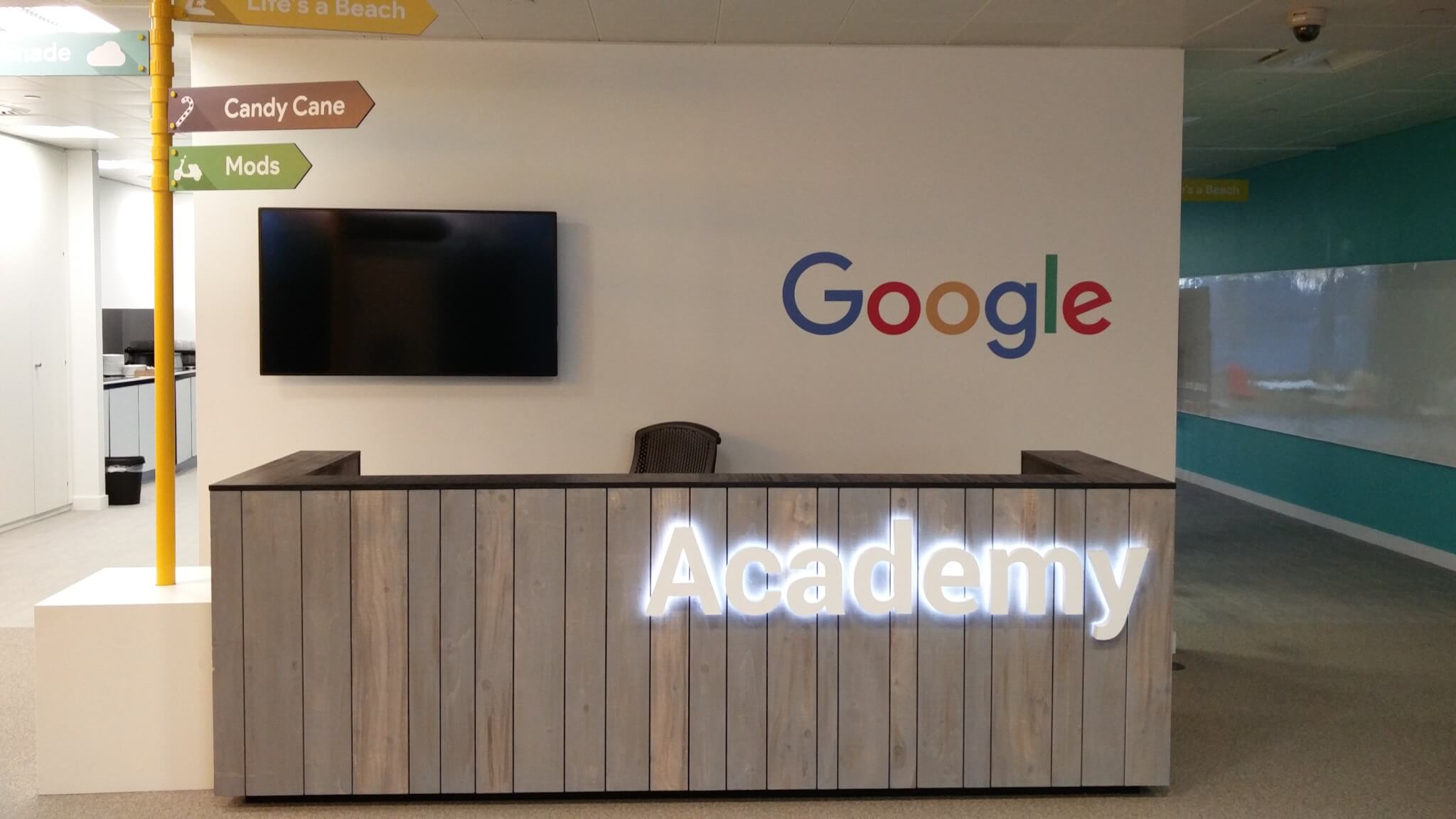
Circus were recently invited to attend Google Bootcamp for a day of training at their new Digital Academy in Victoria, London. Here we discussed several hot topics but in this article we will dive a little deeper into Automated Bidding Strategies and how to get it right.
Why Use Automated Bidding Strategies?
The ad auction is always changing as competitors are entering or leaving the market and changing their bids. The user journey is getting more complex with multiple touch points.
Manual bidding requires a lot of time to segment users and make adjustments for devices, locations, day of week, hour of day, etc.
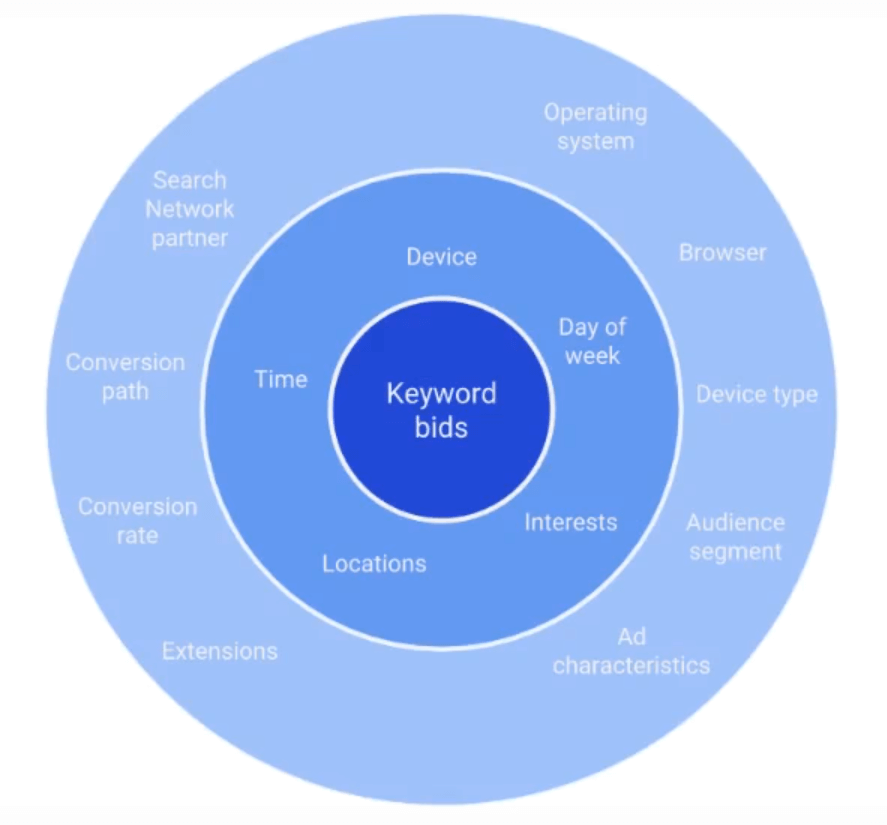
Currently 80% of time is spent doing manual tasks and 20% on strategy. If we could spend 80% of the time on strategy and 20% on implementing then we might find better ways of achieving our goals.
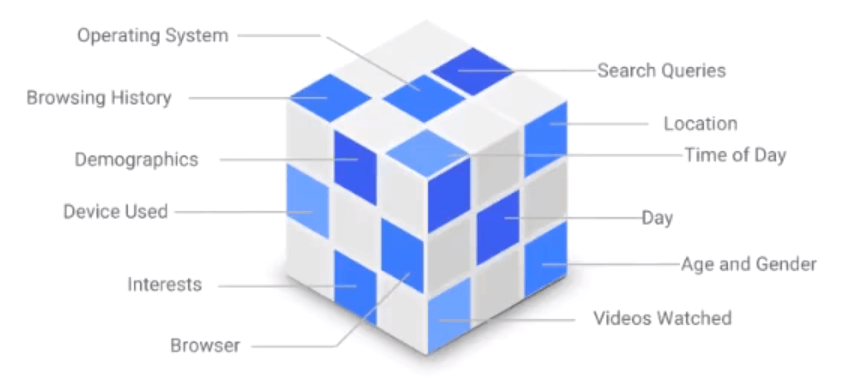
Smart bidding tries to offer a solution to these problems that are so time consuming to solve manually and also factor in auction signals in real time that cannot be done by a person.

Example – 3 different people typing in the query Hilton London could all be looking for different things:
- User 1 – Person looking to book a hotel stay in London
- User 2 – Person who has already booked and looking for directions to get to the hotel
- User 3 – Person already in the hotel and looking for information about the facilities, check out times, restaurant opening hours, etc.
Manual bidding means that we might bid the same amount for the keyword but the value of each user is clearly different.
Automated Bidding Strategies factor in other auction signals in real time to determine the intent of that user then adjusts the bid accordingly.
Which Automated Bidding Strategy To Choose?
There are several Automated Bidding Strategies to choose from and each is designed to meet a specific business goal.

To drive awareness Google recommends using Target Search Page Location or Target Outranking Share.
To drive awareness but also consideration then Google recommends Maximise Clicks.
To drive conversions or grow loyalty Google recommends Target CPA, Enhanced CPC or Maximise Conversions.
To drive revenue or grow loyalty for eCommerce Google recommends Target ROAS (Return On Ad Spend).

How well a bidding strategy might work for you is also dependent on your situation.
Enhanced CPC still allows a lot of manual control if you’re not quite ready to fully let go and trust the machines yet. Google recommends having at least 15 conversions in the last 30 days for this to be more effective.
For Target CPA to work well, Google recommends having 30-100 conversions in the last 30 days.
Whereas Target ROAS requires 50-150 conversions in the last 30 days for better accuracy.
TOP TIPS
Google has been investigating the reasons why some people think that automation is not working for them and they have found the following pitfalls to avoid:
Don’t Be Too Ambitious Too Soon
Set Targets carefully when using Target CPA or Target ROAS. It works best when optimising to realistic goals so don’t just set the target to something that has never been achieved.
Start off slowly setting the target to what it has been recently. Then once it has stabilised, begin to amend the target gradually in small increments. For longer consideration purchases, wait longer to capture more data.
Don’t Change the Conditions
Limit the number of changes to the campaign immediately after transitioning. Every adjustment you make, the algorithm needs to adapt so starts from scratch again.
Don’t Judge Too Soon
Avoid immediate analysis of Smart Bidding performance – it takes 1-2 weeks for the algorithm to calibrate to the new bidding strategy, depending on how much conversion data is available.
There is a Bid Strategy Report that tells you how many days are left in the campaign’s learning period.
Set Conversion Windows Appropriately
Most clicks don’t result in immediate conversions so know your standard time lag from the first click to the conversion and factor this into the waiting period.
For Search campaigns – identify your time lag by visiting Search attribution reports, setting a 30-day window and looking at the conversion lag from the first click.
For Display campaigns – set a 90-day window and segment your campaign-level conversion data by “days to conversion” in order to calculate average conversion lag.
Be Mindful of Seasonality
The Bidding Strategies learn best across normal, stable conditions. This means try to avoid changing to a new strategy over peak periods such as Black Friday.
If you would like help with setting up your AdWords campaigns and implementing bidding strategies in the most optimal way then please get in touch.